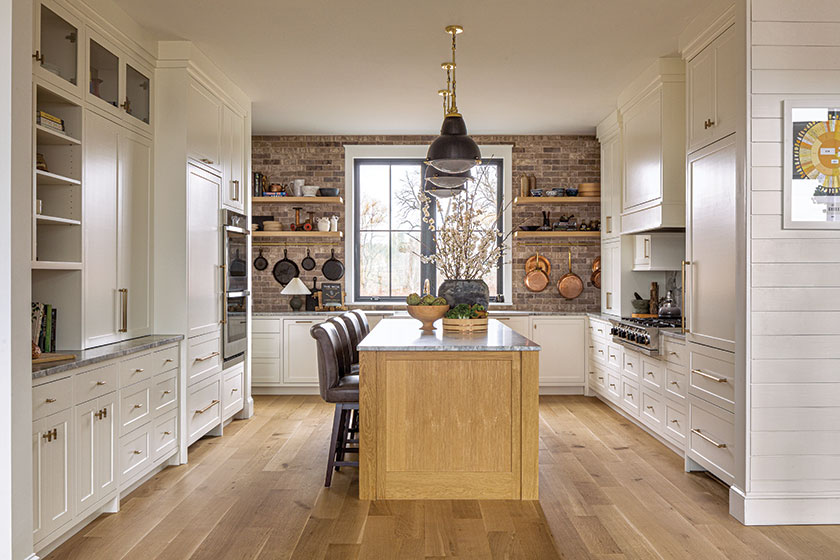
Nature-inspired colors and textures give this seaside kitchen a warm, inviting ambience.
Few rooms call for as much practicality in planning the design than the kitchen. In this new build located in Cape Elizabeth, Maine, functionality played a pivotal role in every aspect of the kitchen design, followed by the style. Jenny Morrison, interior designer and founder of Morrison Design House, approached this 600-square-foot kitchen with the goal of creating a space that not only met the homeowners’ practical needs but also related the interior design with the beautiful waterfront location.
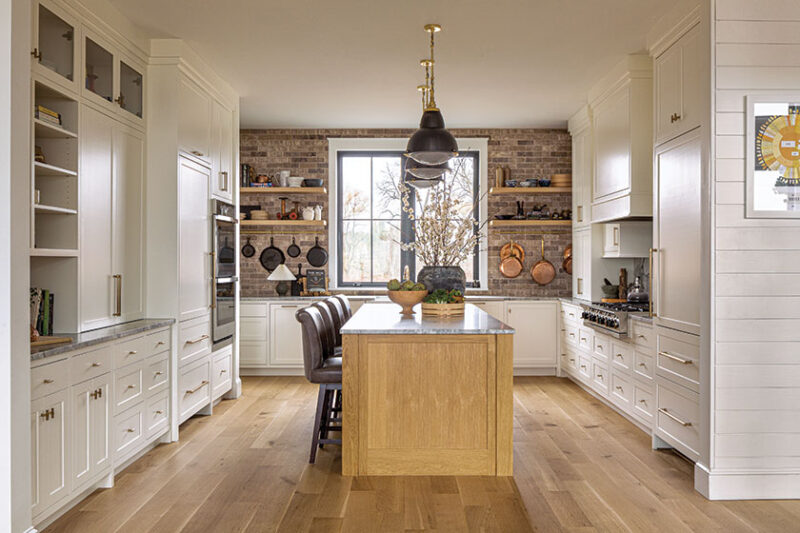
“What I love most about design is biomimicry and biophilia. Taking textures that mimic nature and bringing them inside allows my clients to forge a deeper connection with the world around them,” Jenny says.
Function First
When it comes to creating harmony between style and functionality, Jenny believes that the functional needs always precede the style. “We design for everyday use and let the aesthetic choices follow,” she says. “This way, the kitchen always turns out looking beautiful because it is meant to be loved and used.”
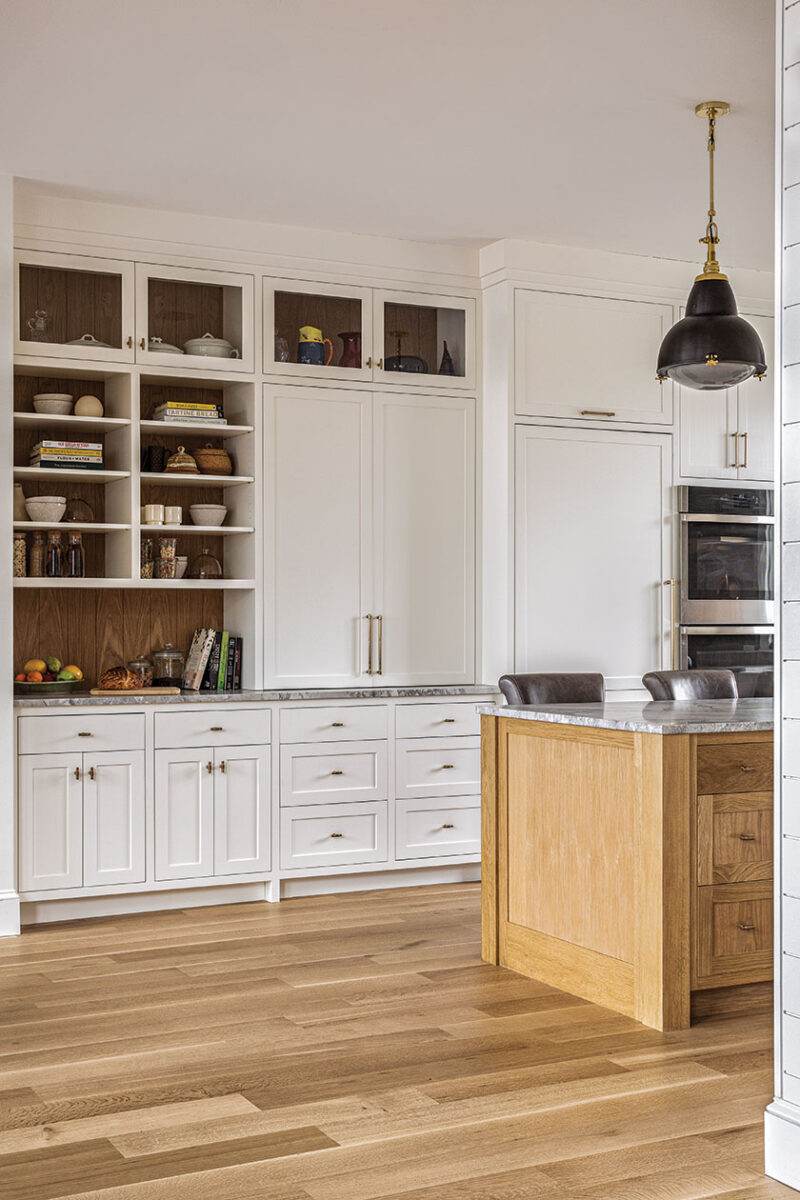
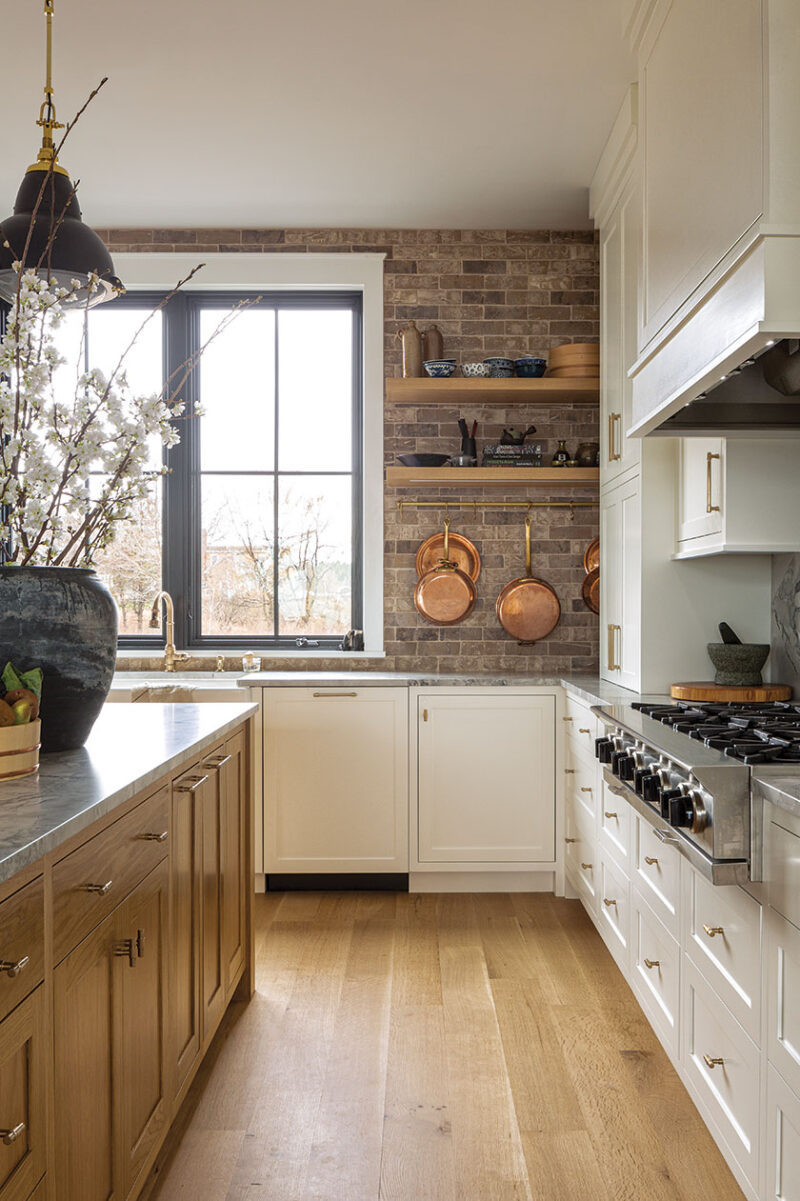
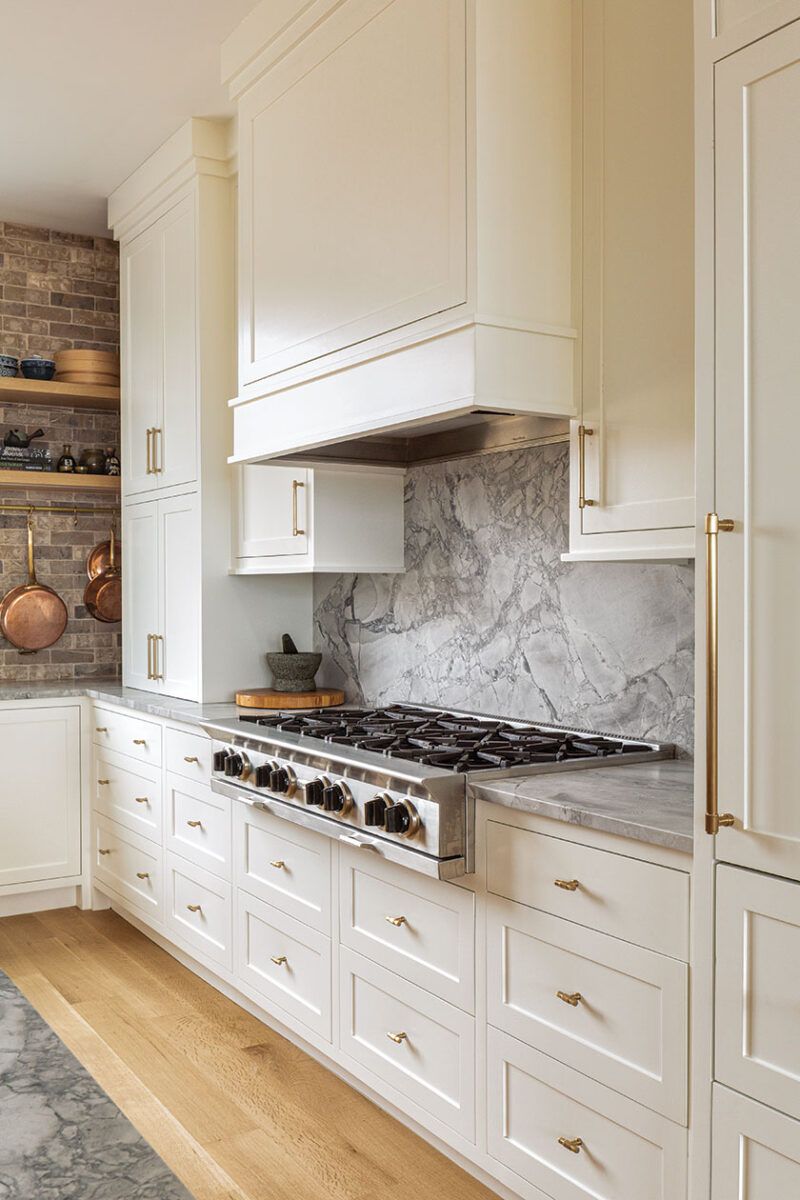
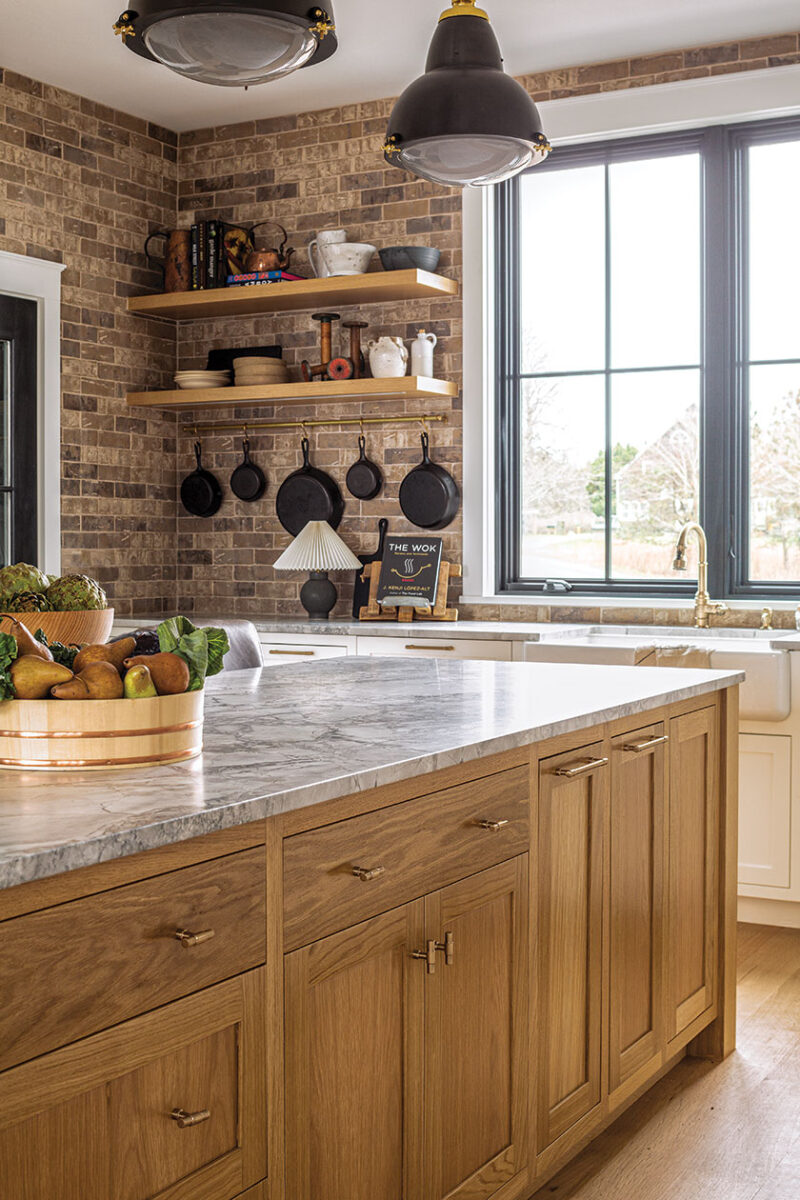
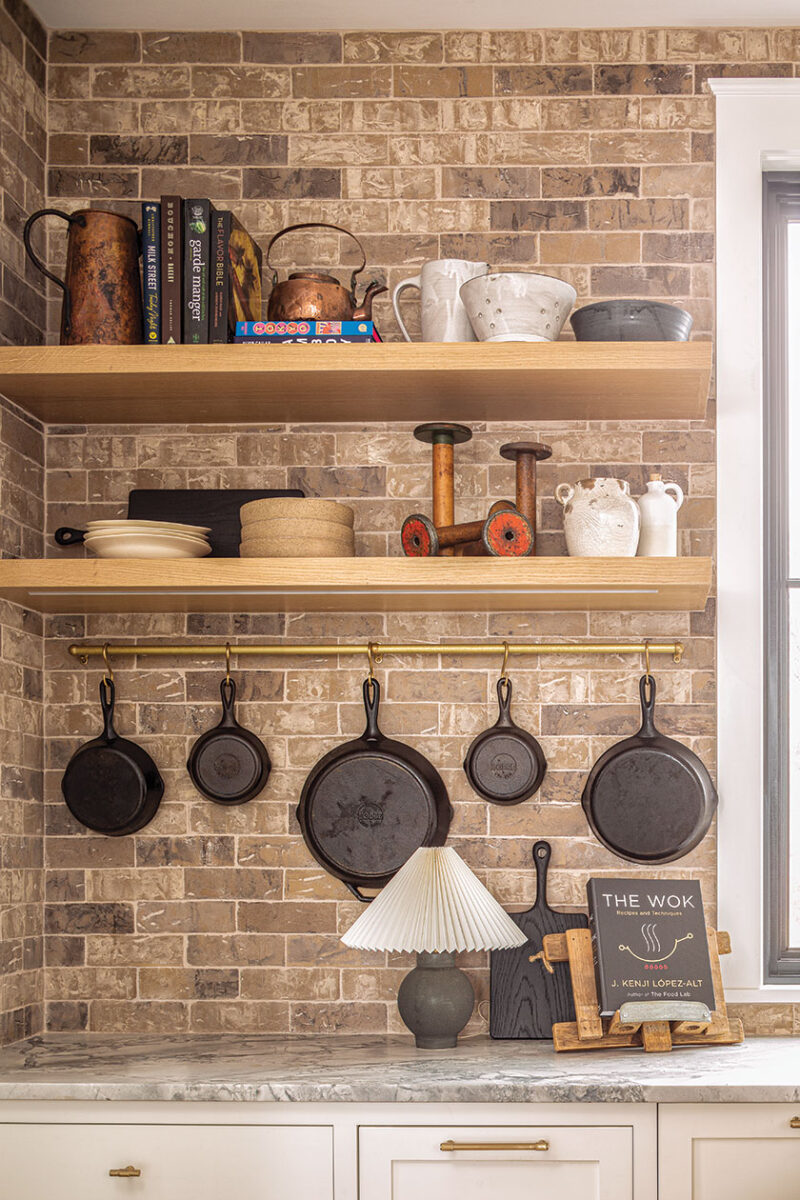
This kitchen’s workflow was a key part of the design process. Jenny and her team divided the room into two main sections: one for cooking, the other for cleaning. The “workhouse,” or cleaning area, where the sink, two dishwashers and two trash rollouts are located, is the back wall with brick backsplash, while the cooking section includes the island, housing the knife block, pots, pans and other utensils as well as the range. Plenty of cabinets and shelf space provide ample storage opportunities—a must for every kitchen.
Drawing From Nature
Once all the functional details were in place, Jenny and her team got to work refining the style. “I wanted this space to feel like the sandy beaches of Maine without using the obvious nautical color palette,” she says. The house is situated on a rocky cove where there is a ledge, sand and water. “I wanted to bring in some of those highly textured elements to create a truly tactile experience for the homeowners, who spend the most time in this kitchen.” To fulfill this goal, Jenny opted for white oak and brick along with painted cabinets for a light, warm and textured look and feel. “I truly believe that the only way to care for this planet is to get clients to feel a stewardship for the places they call home,” she says.
Beautiful
A mixture of nature-inspired materials evokes the seaside location of the home without sacrificing practical considerations such as cleaning and upkeep.
- Be selective. When using texture, Jenny recommends not going overboard. “Our general philosophy is to stick with just one textural component in a space,” she says. “Otherwise, too many textured pieces can overwhelm.”
- Mind your tones. While your materials may be mixed, make sure they are cohesive with complementing tones. “For example, the white oak on the island and shelving marries well with the brick tones,” Jenny says.
- Create contrast. For a more earthy feel like this kitchen, Jenny recommends making your design pop with one contrasting element, like the countertops here. “It can prevent the design from falling flat,” she says. “It creates depth and timelessness.”
To see more of Jenny’s design work visit Morrison Design House.