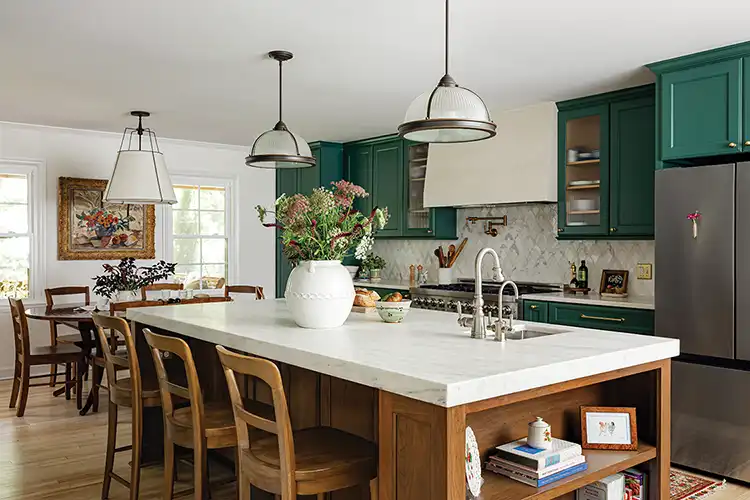
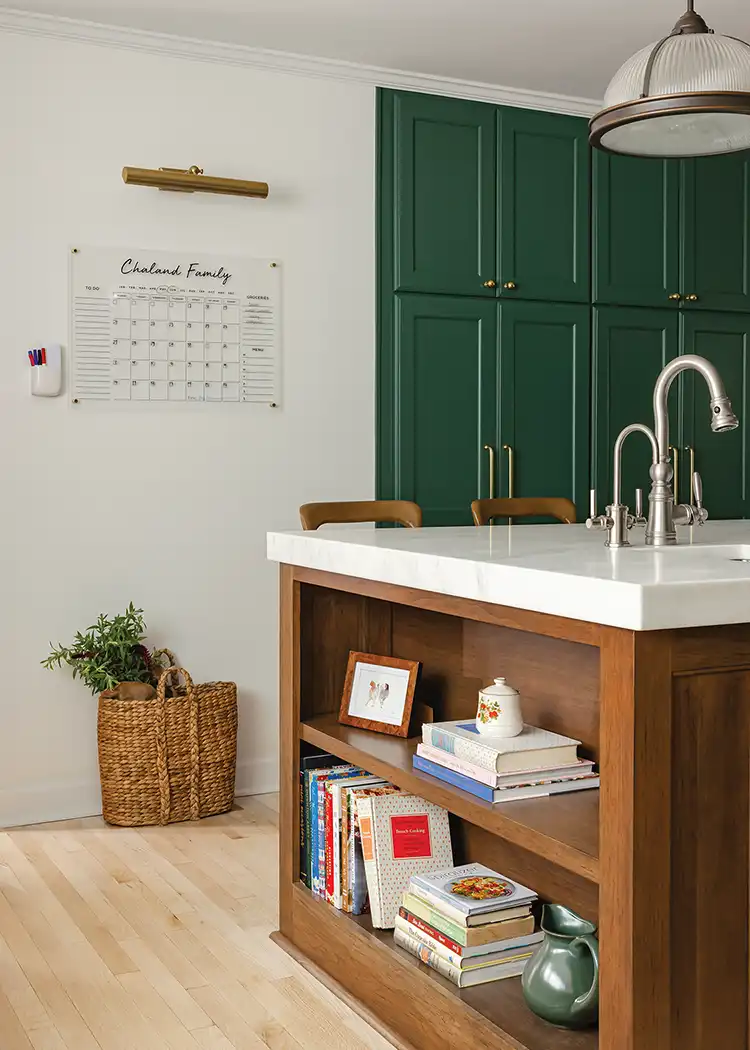
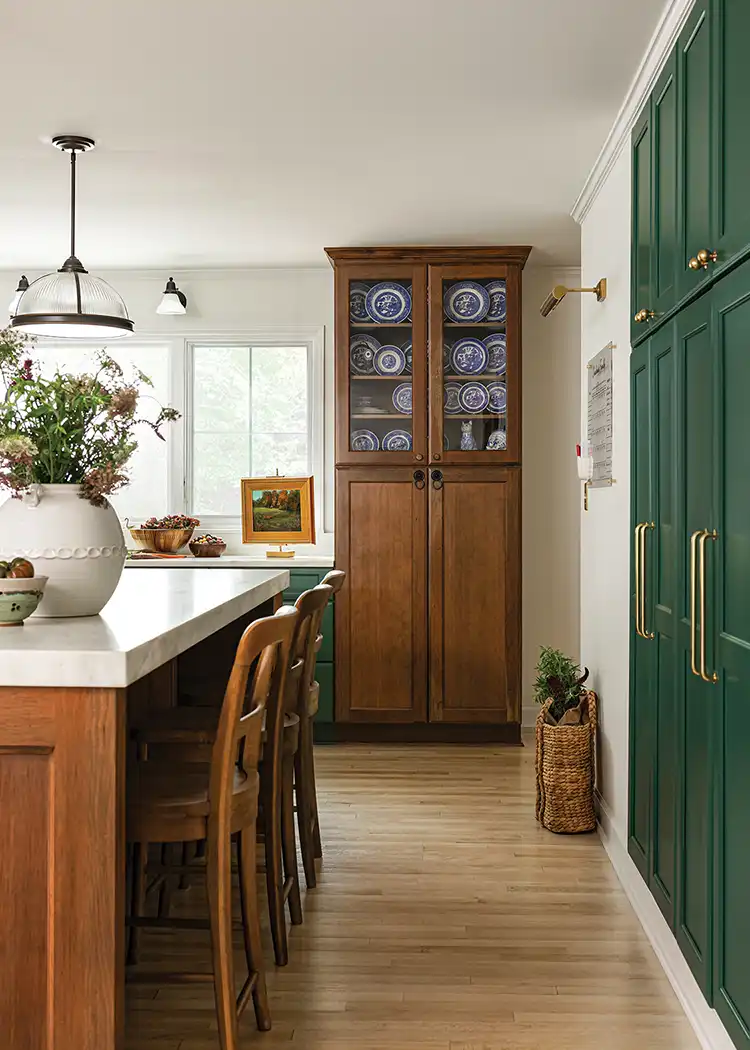
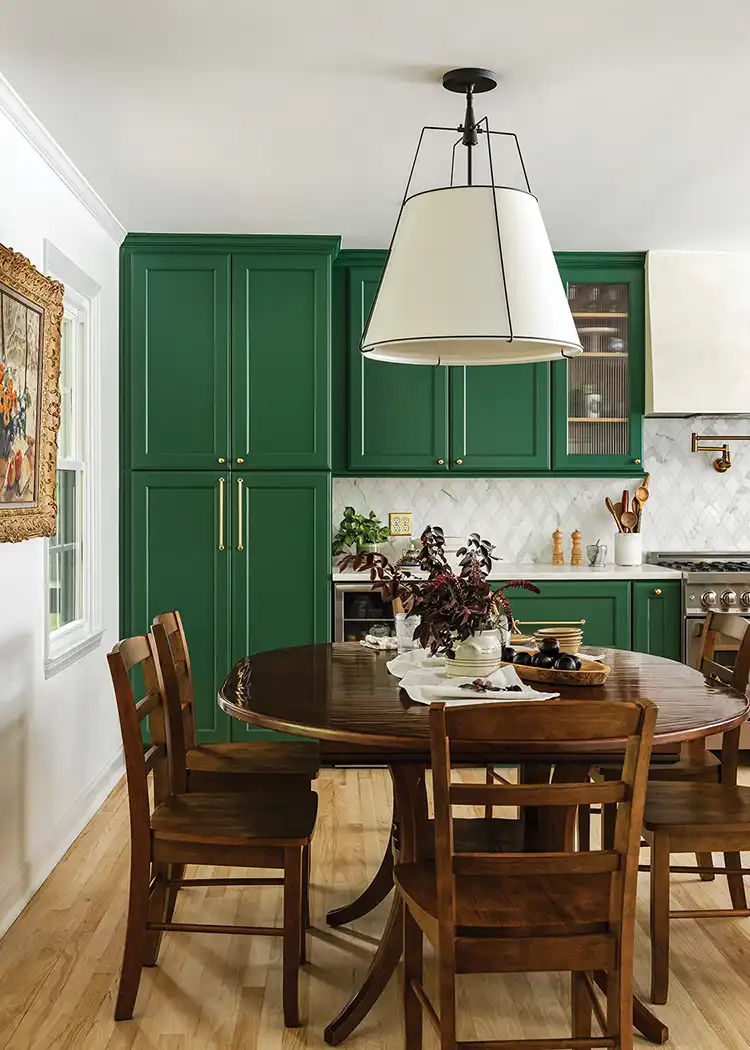
This reimagined kitchen and dining space is a blend of personalized design details, European accents and functional features.
In the hustle and bustle of everyday life, we sometimes forget that these are tomorrow’s memories. Looking around, it’s easy to see those special details that are meaningful only to ourselves, and the more of these details we incorporate, the more our house feels like a home. For the owner of this cozy home in Thomasville, North Carolina, it was time for an upgrade to her kitchen and dining area that would better suit her family in style and function. She hired Cierra Toland of Toland Interiors to revamp the space.
“I believe our homes should be an outward expression of the very best parts of who we are at our core,” Cierra says.
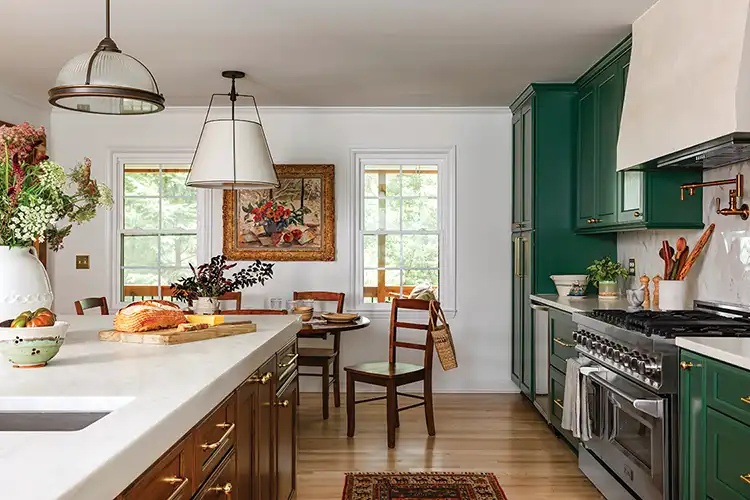
Family & Function
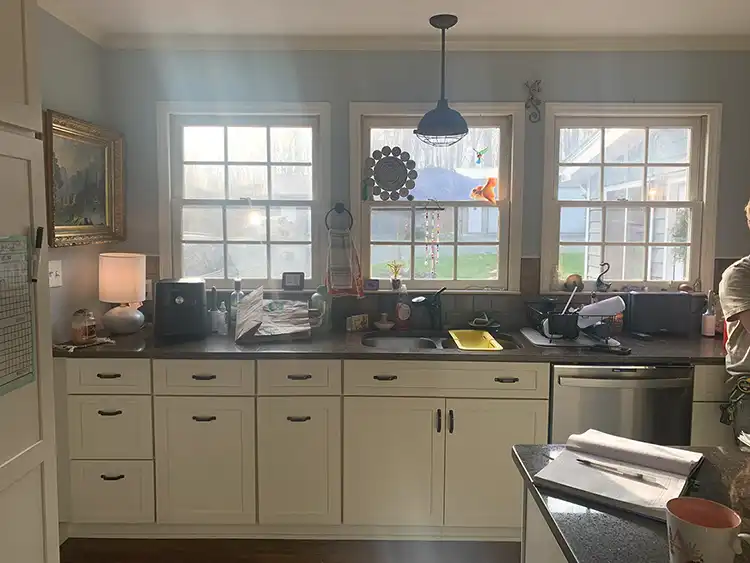
The house is the family’s “forever home”, and this kitchen standalone renovation was part of their overall plan to eventually transform every space and make it their own. Their goals were simple: open up the originally segmented kitchen and dining areas to allow hosting and create better functionality.
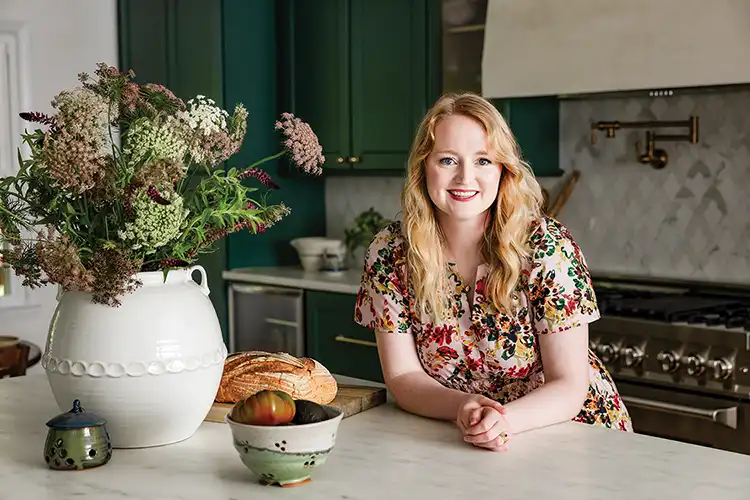
“The homeowners wanted a sentimental space for their family where they could cherish old memories and forge new ones together,” Cierra says.
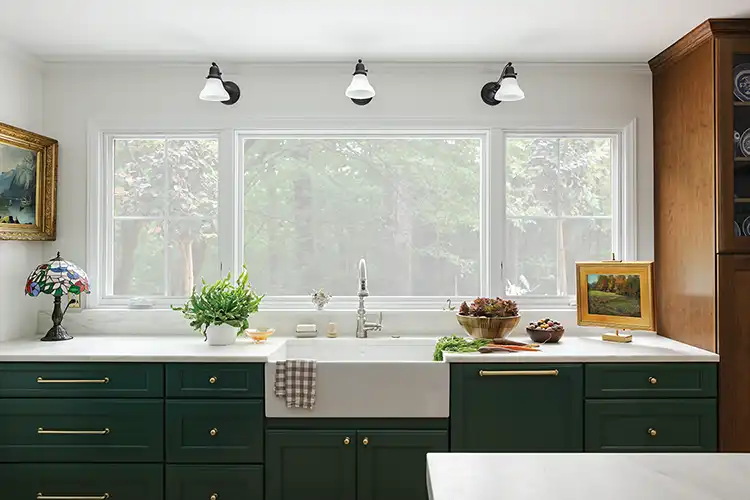
To accomplish this, they removed the wall that separated the dining and kitchen areas. “Doing so let in a lot more natural light and gave us a rather large blank canvas to design on,” Cierra says. “We also replaced three individual windows over the sink at the back of the house with one large picture window flanked by casement windows on each side, which were a huge improvement.” Abbie also requested a large island to help with prep and serving for the holidays.
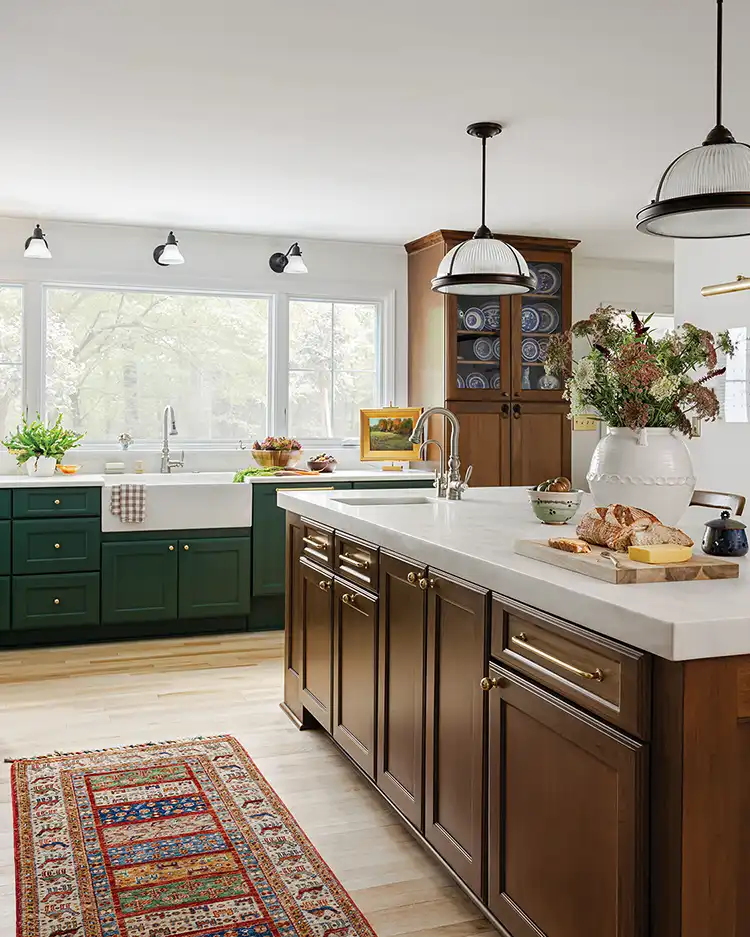
European Touches
In addition to layout and functional design features, Cierra helped Abbie and her husband hone their own personal style to craft a space that looks and feels authentic to who they are and where they have come from. “We drew inspiration from the homeowners’ life together and their collective family histories, which have roots in France and West Virginia, as well as the couple’s individual roots in Santa Fe, New Mexico,” Cierra explains. “The kitchen is the heart of any home, and we all wanted this space to reflect this melting pot of memories and honor their roots.”
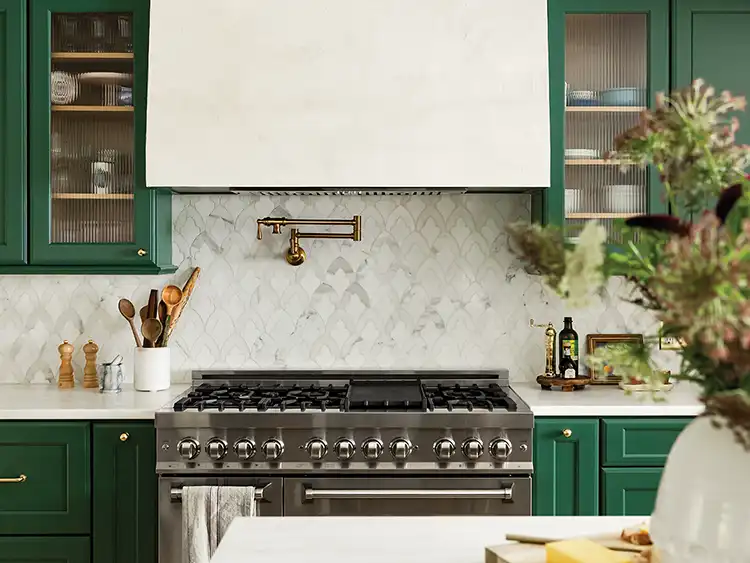
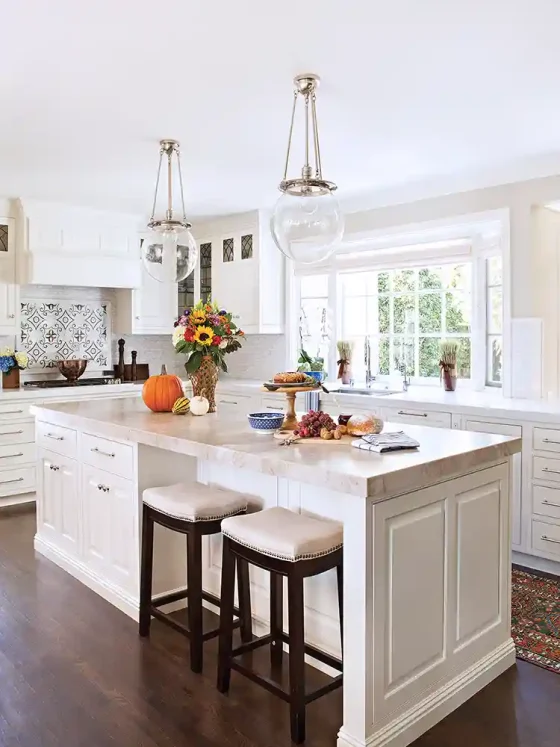
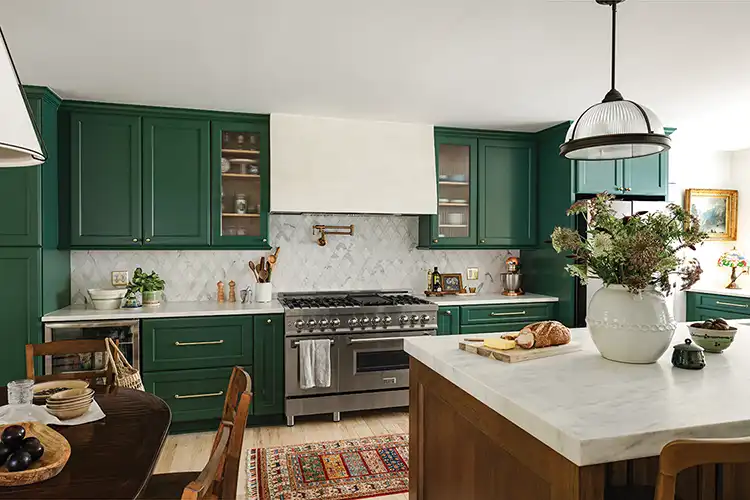
Utilizing materials such as brass, marble and wood, Cierra worked with the couple to create a European-cottage style for the newly opened space. Every detail, from the Parisian pendant lighting above the island to the hand-selected marble backsplash above the range, reflects a timeless and Old-World feel. Dotting the room are pieces from their art collection, continuing the personalized feel of the space. With a mixture of soft textures and layered treasures, Cierra transformed this kitchen and dining area from generic, segmented spaces to a light and bright functional space that reflects the family that inhabits it.
“Homes should look and feel like the people who live in them,” Cierra says.
Level Up Your Backsplash
Far from a minor detail, selecting the right backsplash for your kitchen is key to the overall success of the design of the space. Cierra offers the following tips for choosing a backsplash for your next kitchen renovation.
- Make it Matter. Treat your backsplash as an integral part of your design. “For me, selecting a backsplash for a kitchen is much like picking the right rug for a living space: It’s a centerpiece in every good design and should never be an afterthought, even if you’re going for a very subtle look,” Cierra says.
- Think Outside the Box. Don’t restrict yourself: Choose something that really speaks to you. “Consider alternative materials beyond tile, such as stone, beadboard or even carrying your countertop material vertically up the wall for a seamless look,” Cierra says.
- Create a Tile Template. Remember that the layout can completely change the look of your tiles, especially with natural stones that have variation in their colors and patterns. “Take this into consideration and remember that the simplest tiles can stand out if they’re laid in a unique pattern,” Cierra says.