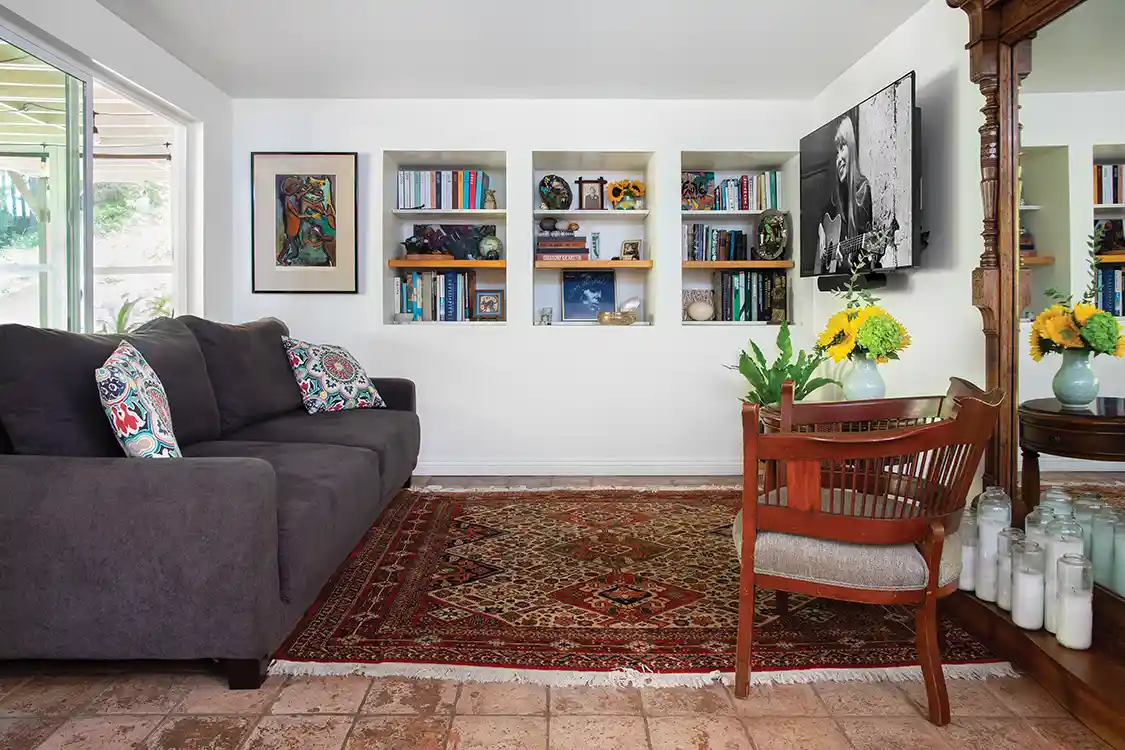
Cozy and filled with personality, this 1940s Laguna Beach home brings together simplicity, natural elements and a fun spin on eclectic collections.
There can be a tendency in many modern-home designs toward the same kind of black and white, minimalist aesthetic. For those who enjoy the charm and character of cottages and bungalows, it is always exciting to see life and personality infused into a home’s design and décor, especially if that home is half a century or more old. Christopher Karl and his husband, Michael Bucaro, had lived in Laguna Beach, California, for three decades before stumbling upon this two-story home tucked into Bluebird Canyon. Their unique, curated and fresh style gives the small space a light, cozy and unmistakably personalized feel.
Moving In, Making Home
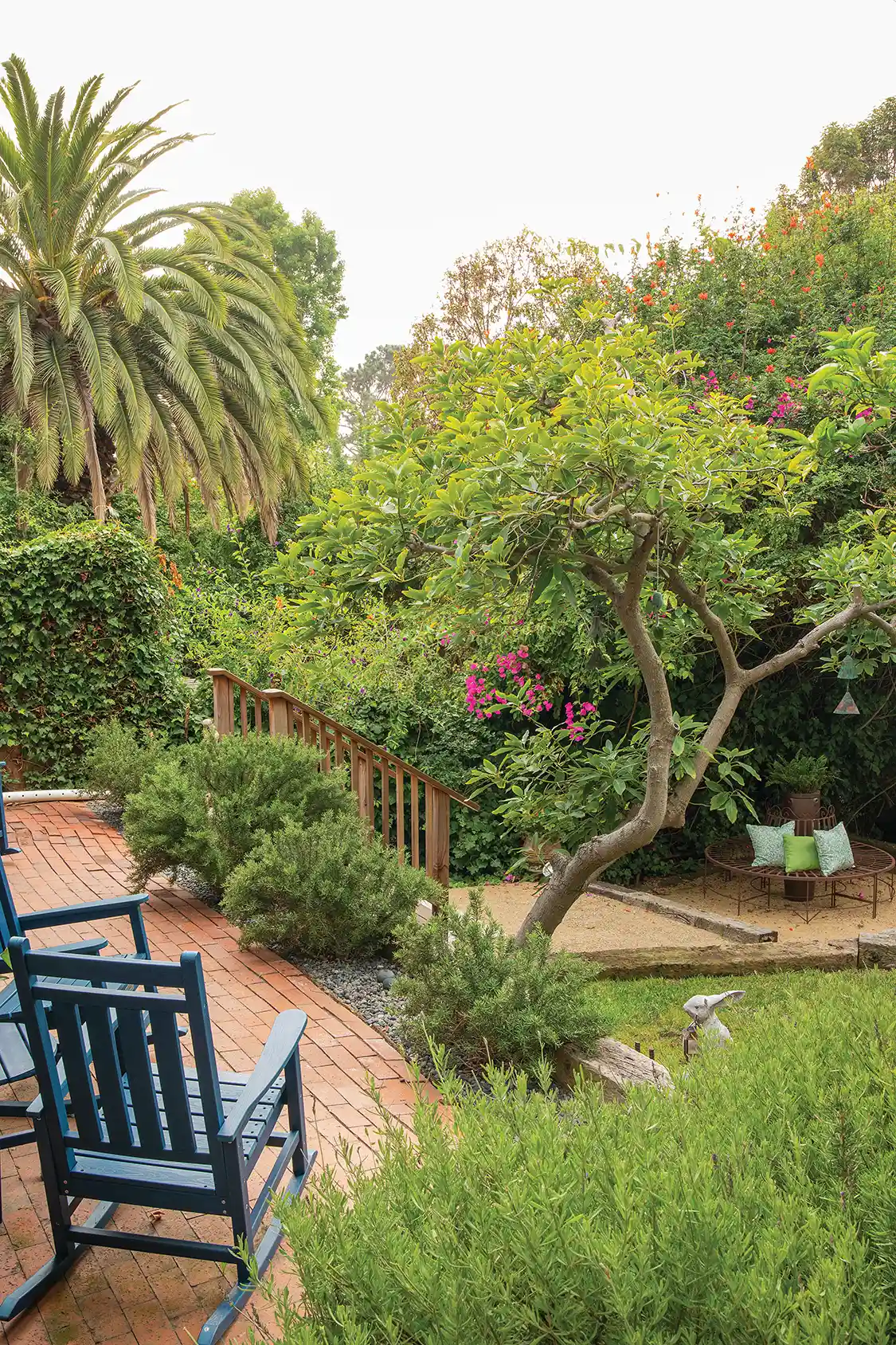
When Christopher and Michael came across this 1940s gem, they knew it was meant to be. “The space opens up into the canyon, which is our favorite feature,” Chris says. The sprawling backyard feels wild, with an abundance of natural and planted foliage. “Our experience of living in Laguna Beach was always centered around the ocean,” Chris explains. “When we found this space, it knocked us out—we could not believe an actual forest-type space existed in our town.”
“Finding a way to display what we use and love is always the simplest goal.”
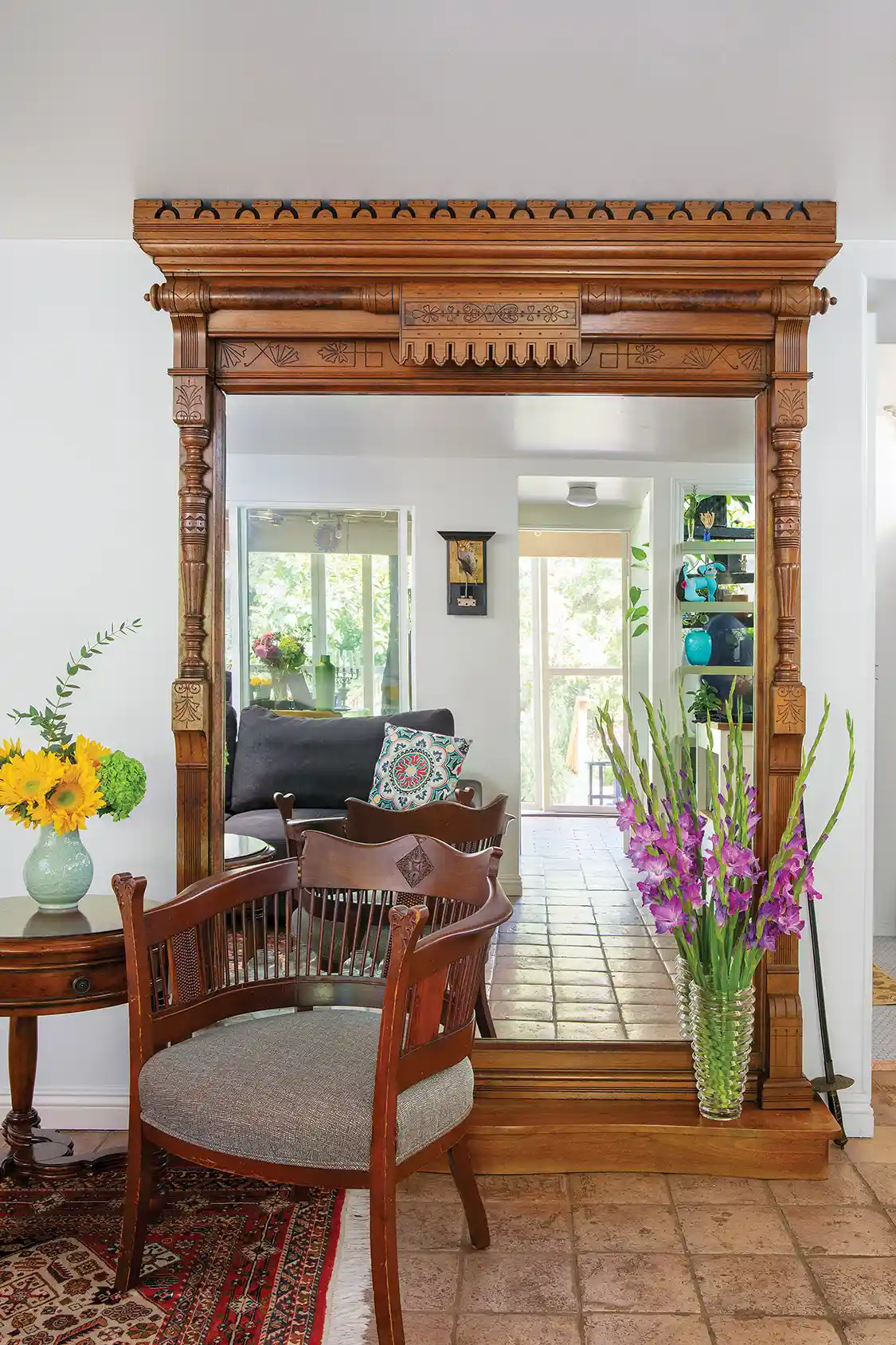
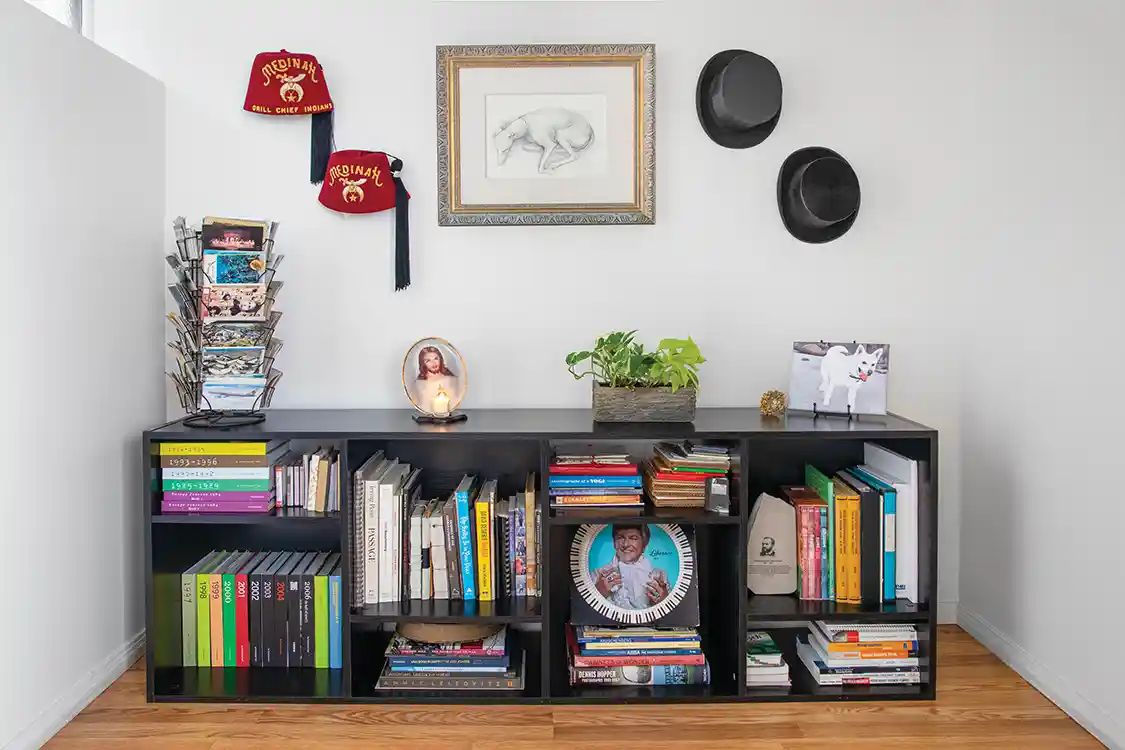
The new home was smaller than their previous living space, so one of the driving forces of the move was an effort to simplify. “We trimmed down our possessions at least two-thirds,” Chris says. “Everything we brought was important to us, and surprisingly enough we don’t miss any of what once seemed so important.” The home was modified over the years so that the top and bottom space are completely closed off and separate with different entrances to allow for privacy. An added perk is that their dear friend of many decades lives in the upper portion of the home.
Inspired by Nature
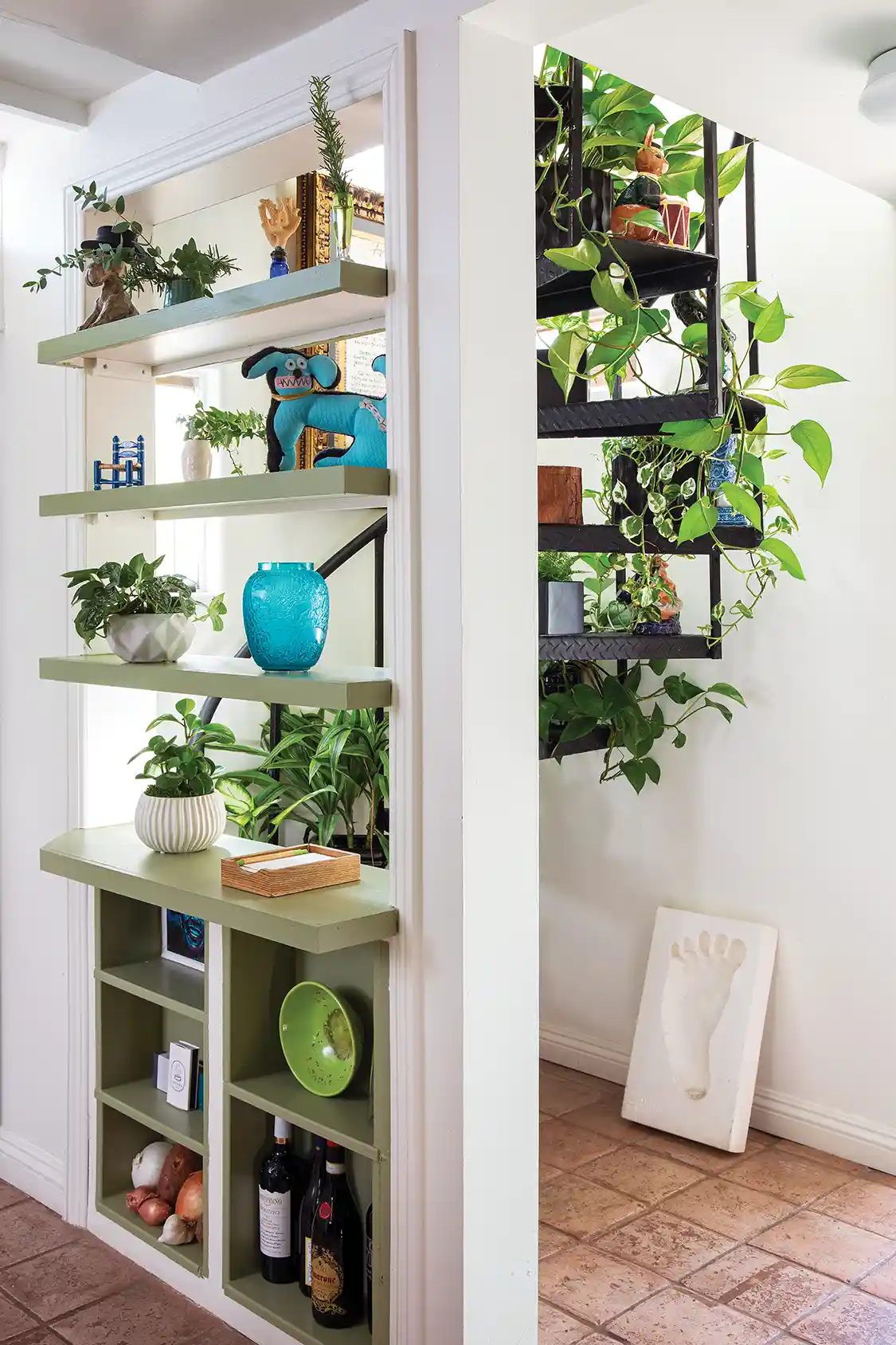
As an award-winning creator for a corporate plant company that does major installations for all types of businesses, Chris’s influence on the exterior and interior décor is unmistakable. However, much of the inspiration has been drawn from the location of the home and the natural surroundings. “Because we live in a canyon, it is really important that plants be a part of our living space,” Chris says. The integration of plants into every aspect of the home is called Biophilic Design. “Our human connection to plants is hard-wired,” Chris says. “They have been in our lives a lot longer than appliances or cell phones, so we respect that deep need and connection to nature by letting the plants play a specific role in the design of all the spaces, whether big or small.” He and Michael also utilized wood furniture to complement and continue their Biophilic Design within the home.
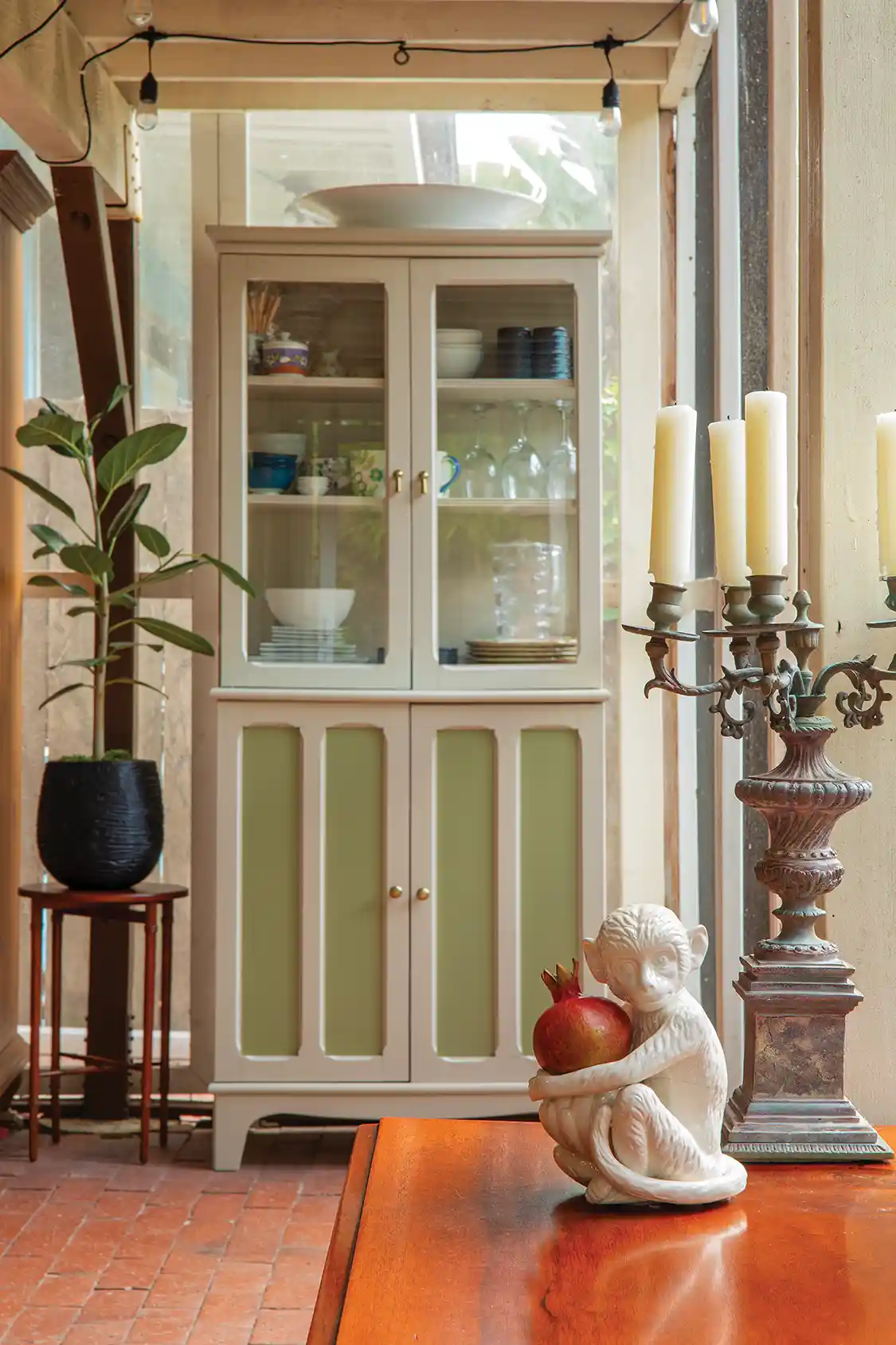
The screened-in porch is another way in which they connect the interior and exterior spaces of their home. “We have a Buddha Garden, hanging ivies and always some cut flowers to bridge the gap,” Chris says. Outside, they have created a few spots for gathering and enjoying the outdoors. “The porch is like a decompression chamber on a spaceship; it prepares you for the inside,” Chris explains.
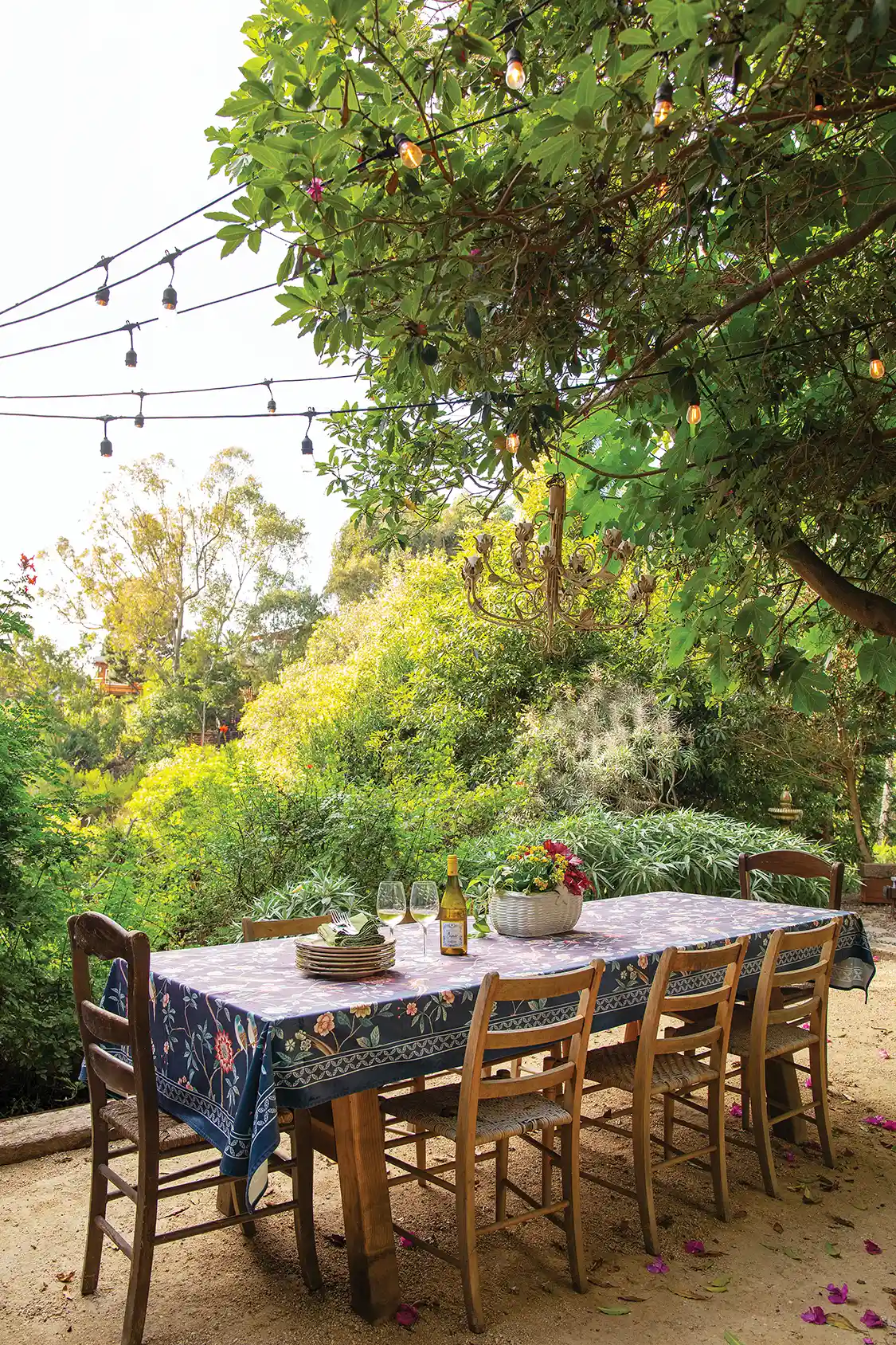
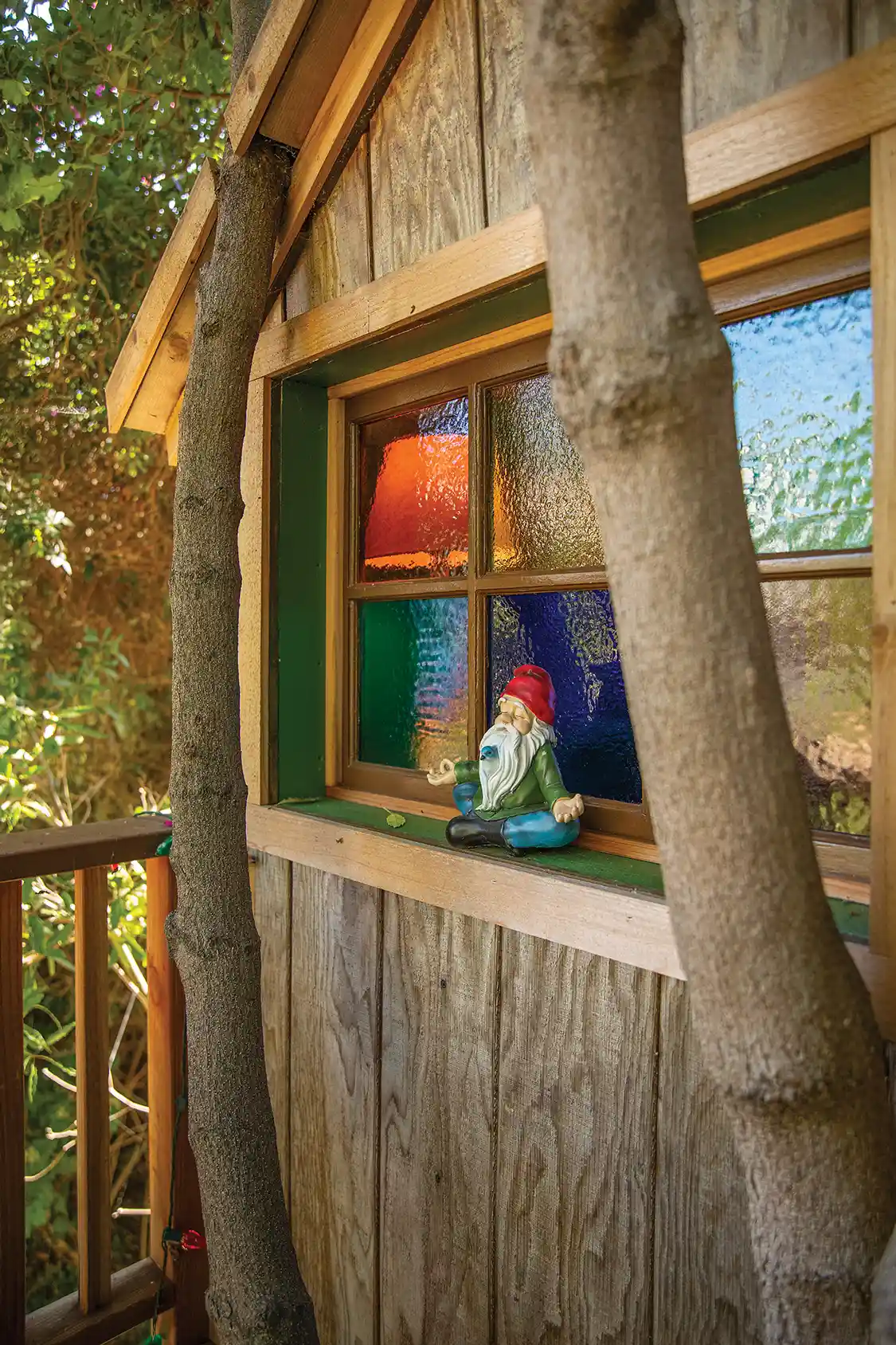
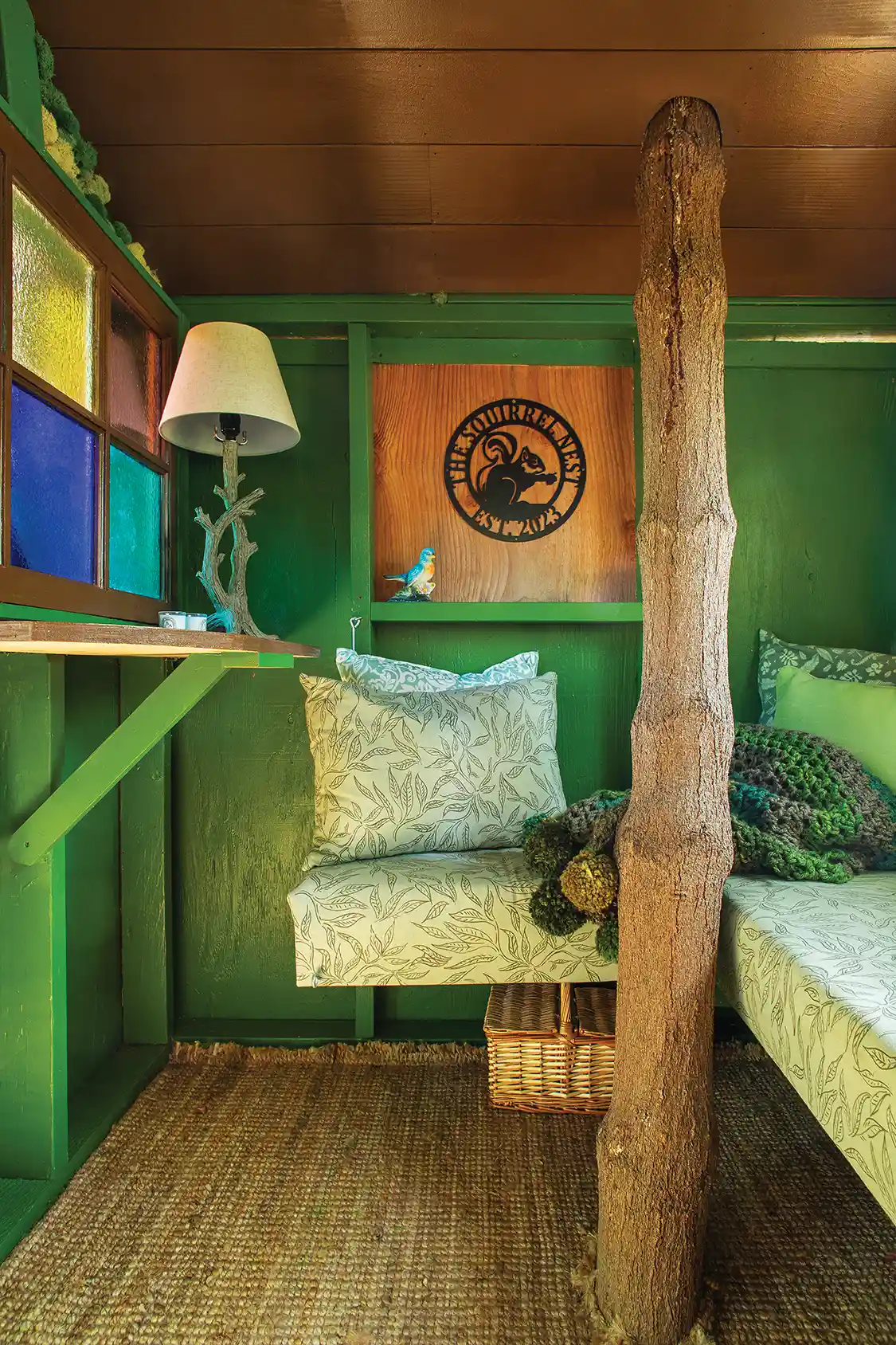
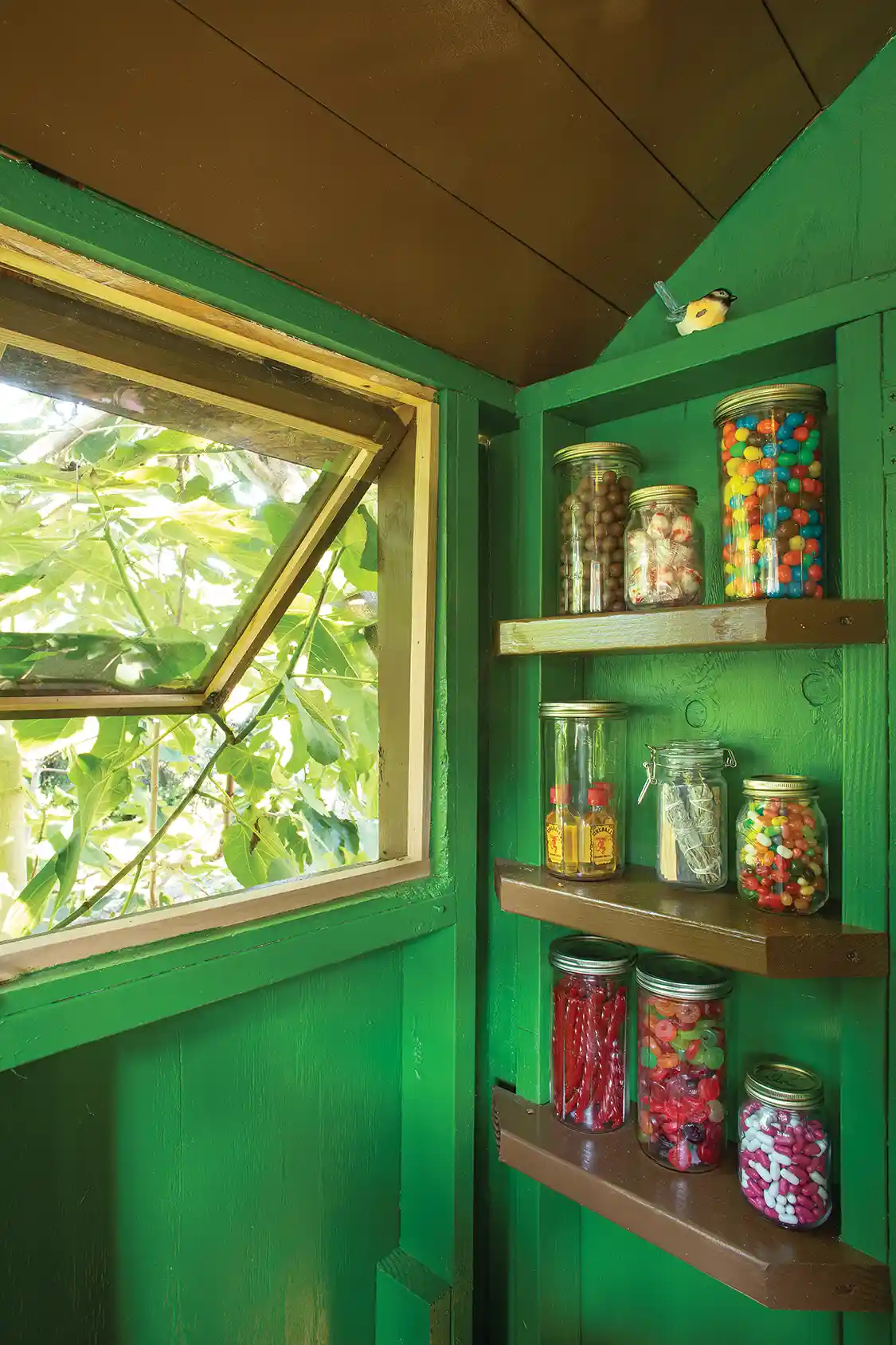
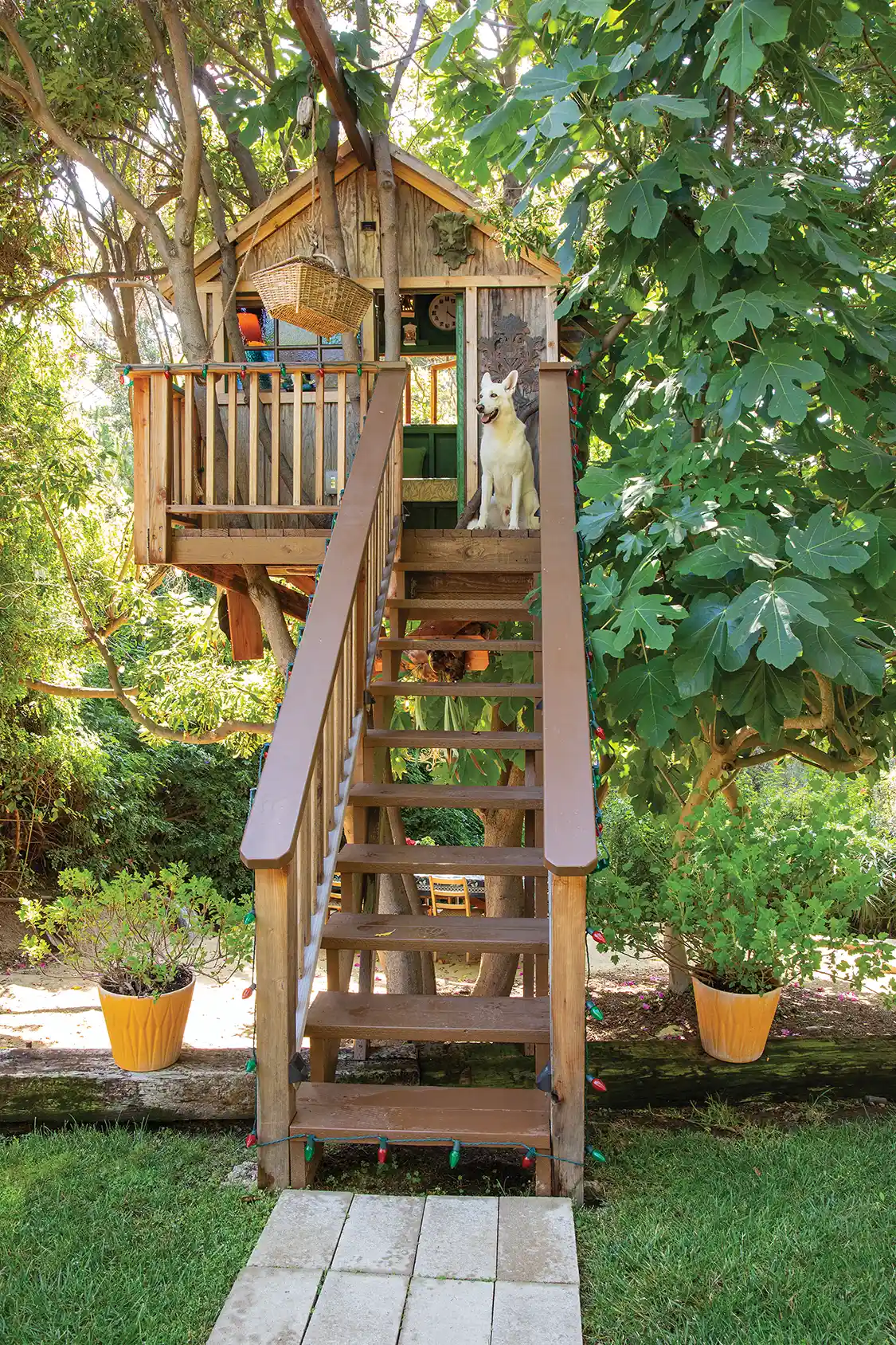
The revamped treehouse, called The Squirrel Nest, is a fun and whimsical retreat. A dining area with stringed lights allows for enjoyment of the year-round balmy weather of Southern California. The treehouse was originally built for children more than 20 years ago. It was rather dilapidated and unsafe, but Chris and Michael took a few weeks to reenforce it, putting on a waterproof roof and painting the inside the same green as the fig leaves it is nestled in. The seats and pillows were covered in botanical-print fabrics and shelves were built to hold jars of candy and other treats. There is wi-fi in the treehouse, so it is used often for work on the laptop or to enjoy a glass of wine with friends. “It holds up to four people and a dog,” Chris says. “The smells of the canyon and sounds of the over 25 varieties of birds we hear daily tap in and ignite our affinity with nature,” he adds.
The Art of Collecting
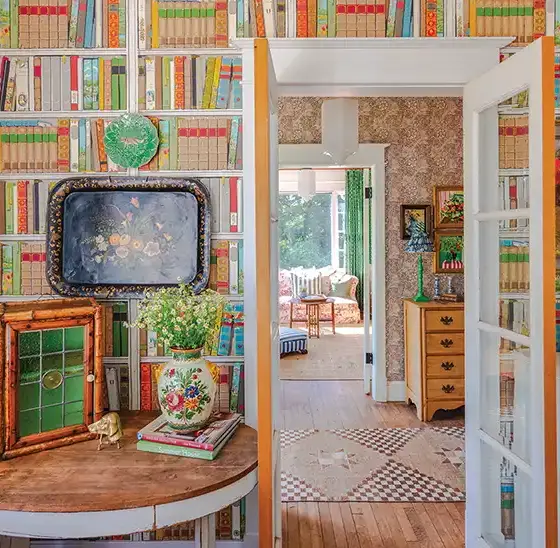
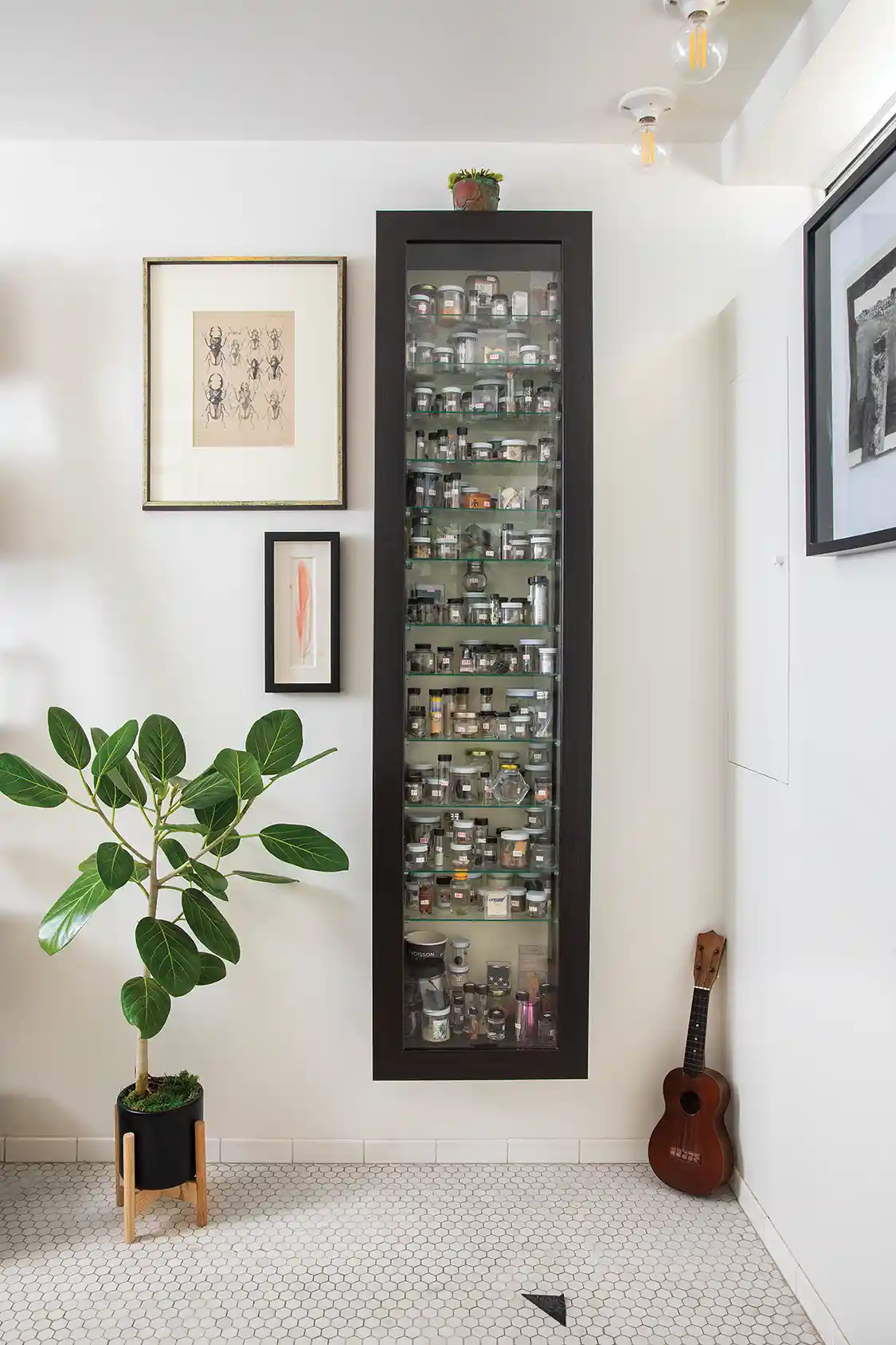
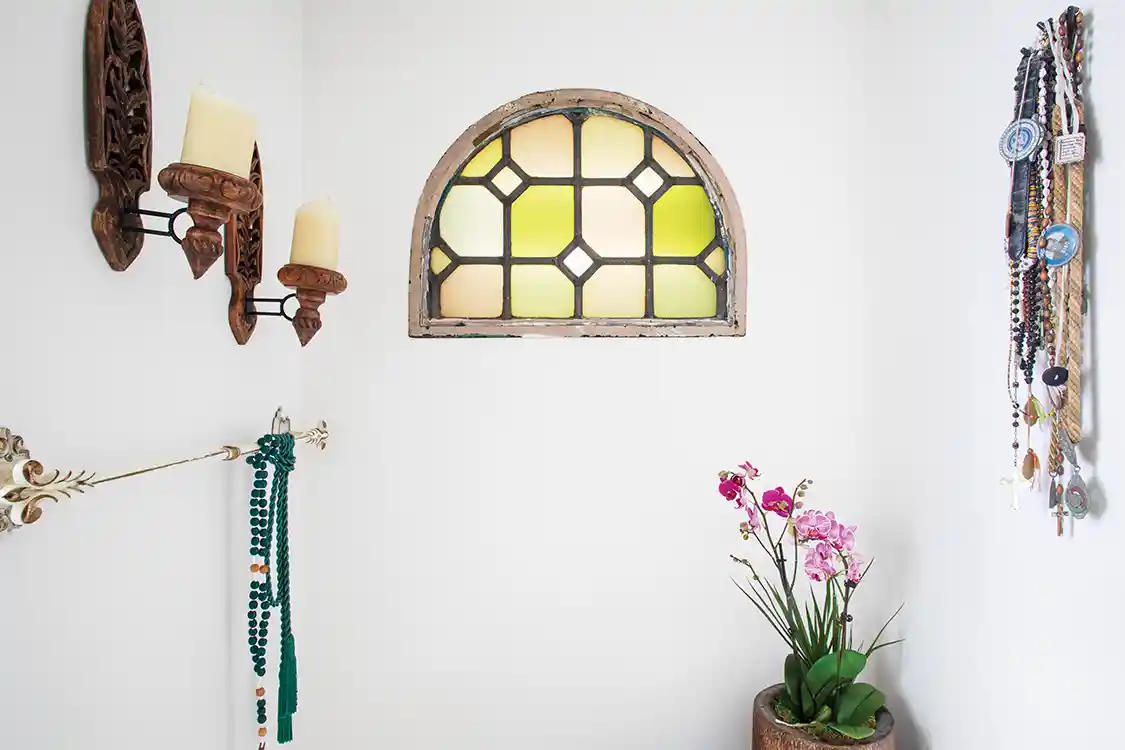
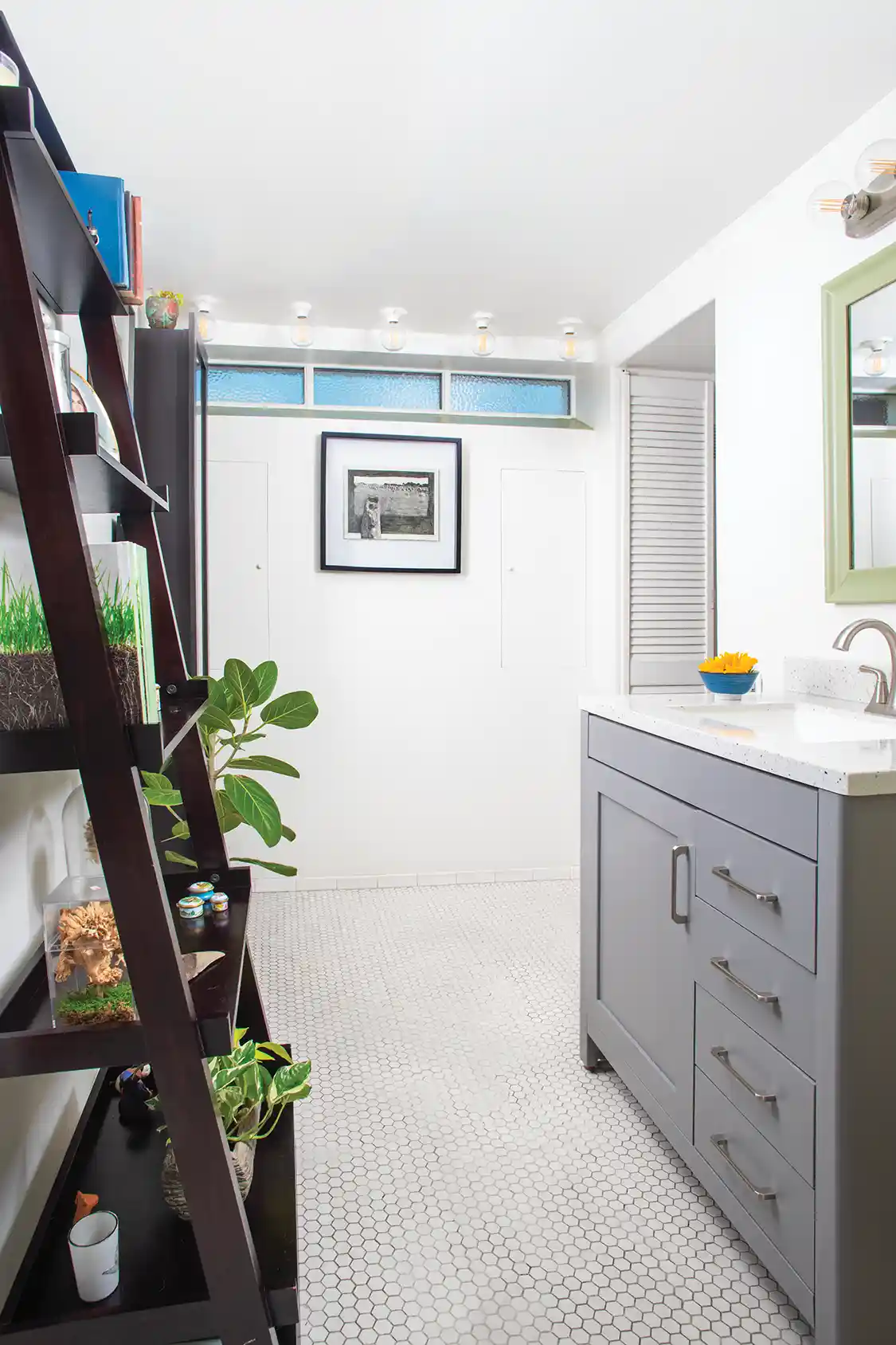
Alongside and intermingled with the plants is the couple’s collection of mementos and nature-inspired oddities displayed throughout the home on shelves, in glass cases, on walls and in jars. The inspiration derives from cabinets of curiosities from the 1700s. Originally taking up entire rooms, these cabinets eventually became drawers or shelves full of unique and interesting items collected by aristocracy to entertain guests. Chris’s rendition, most clearly seen in his cabinet in the bathroom, pays homage to this tradition. “Each of the items is from a significant time and place in my life,” he says.
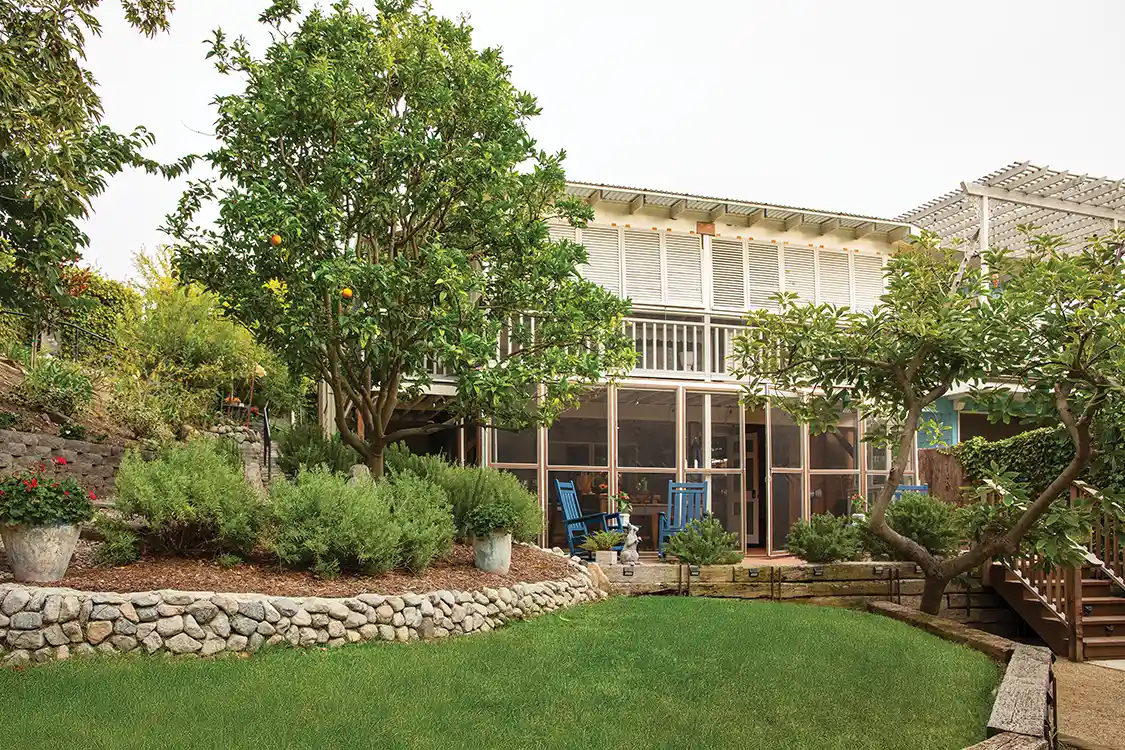
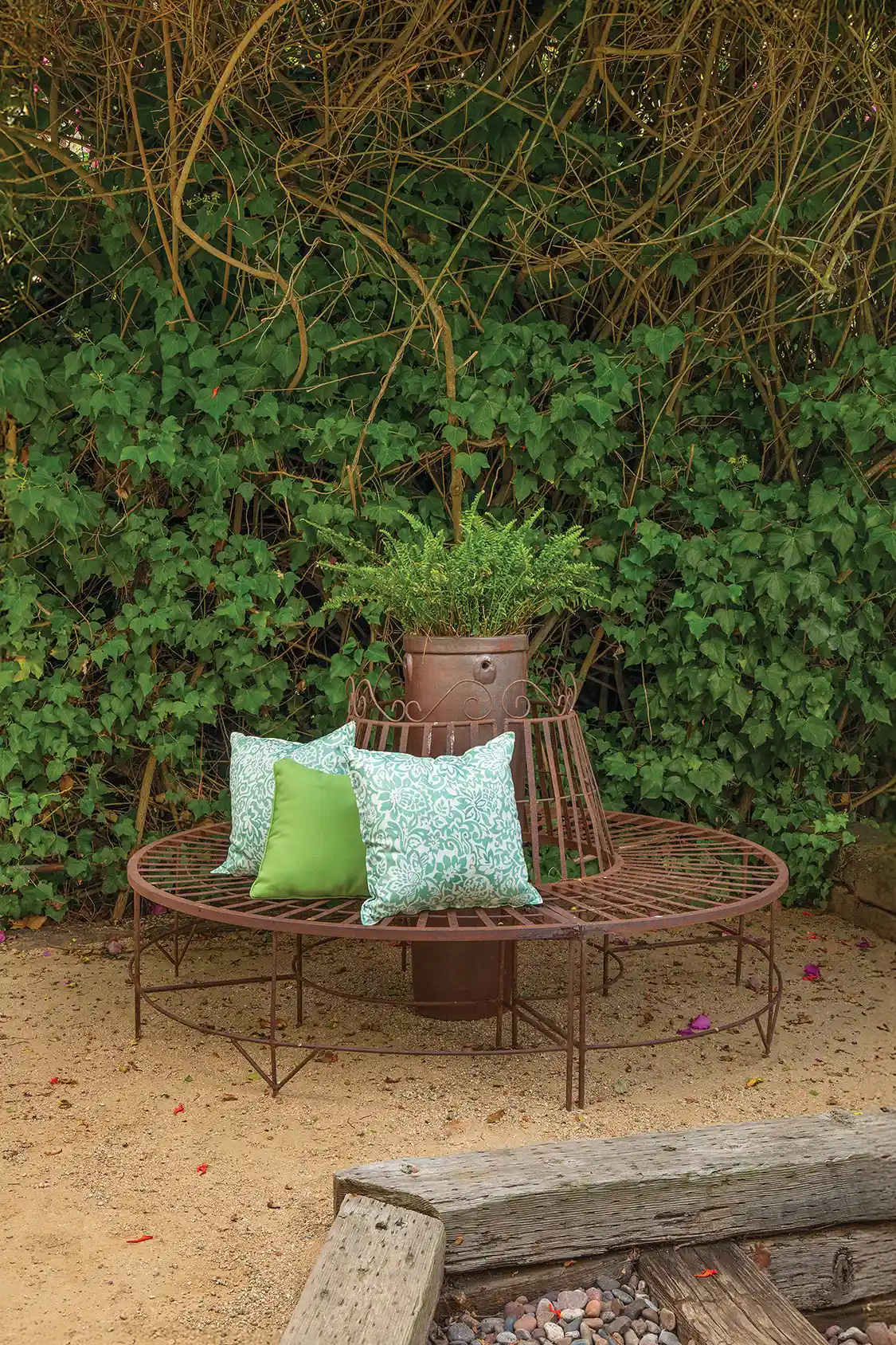
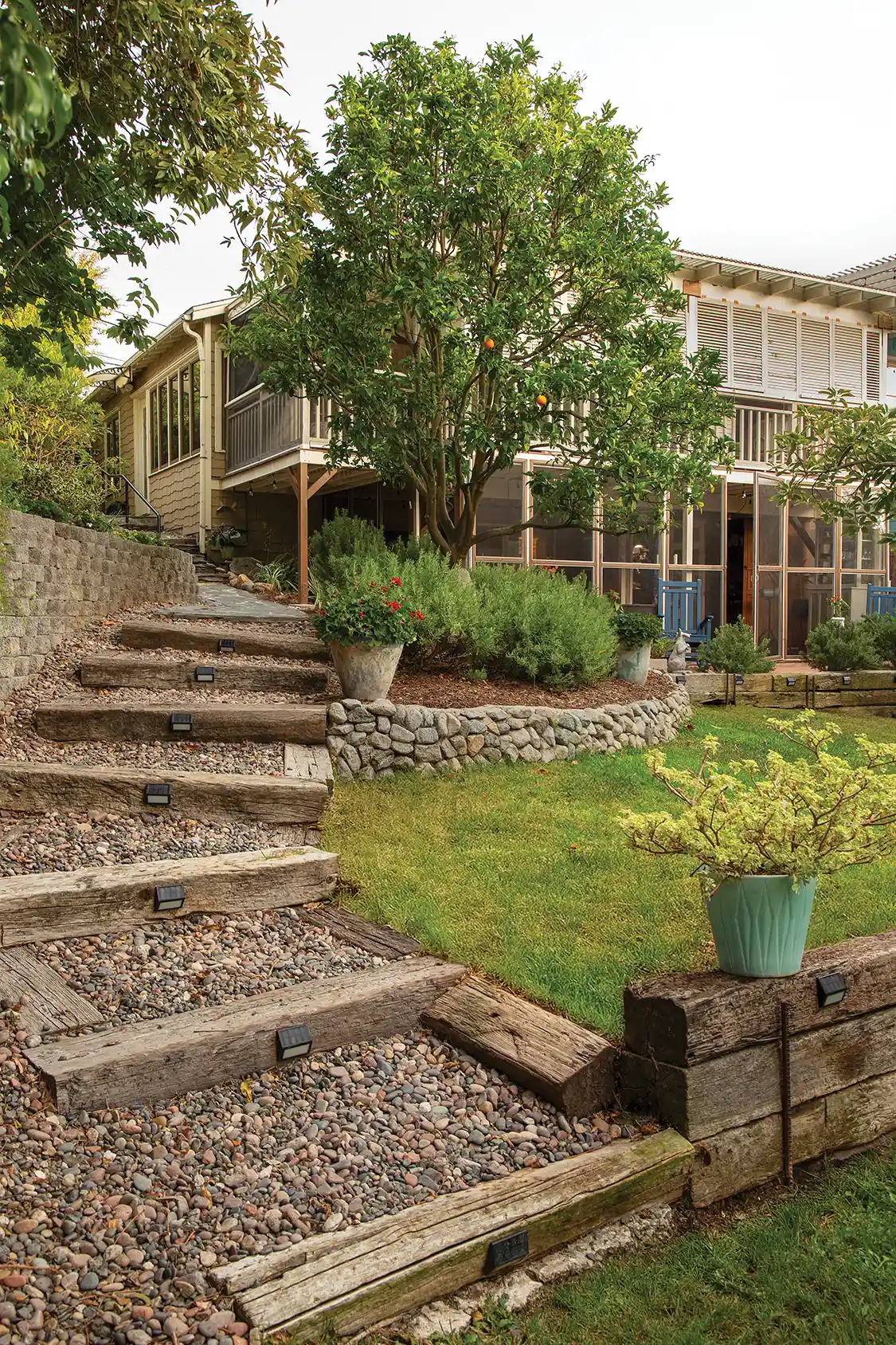
Other spots in the home likewise contain vignettes or gathered, smaller collections of meaningful items. Books and artwork were dwindled down, so those that remain held special import to the couple. While small, the home feels much larger than its square footage due to the interesting items it holds and its connection to the wider wilderness outside. For Chris, Michael and their gentle German Shepherd Lazio, it is simply home sweet home. “Finding a way to display what we use and love is always the simple goal,” Chris says.
Becoming Biophilic
Do you love plants and want to include more of them in your home décor? It may seem difficult to figure out how to start when you haven’t done it before. The truth is that it is actually very simple to include plants throughout your home. Chris offers insight into making your home more plant-friendly.
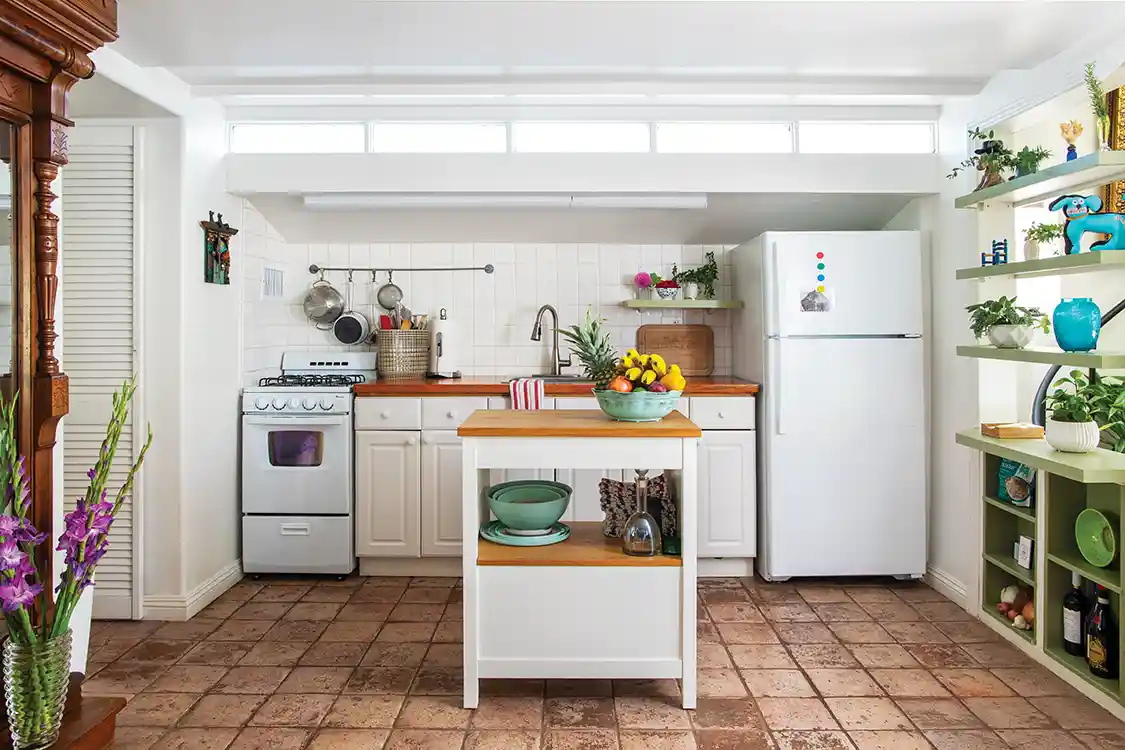
- Do It! “First of all, always use plants in your design,” Chris says. “Big or small, they will bring calm and creativity into your life.” Add a potted bush or tree to an empty corner or simply place little pots onto shelves or open counterspace.
- Don’t Overwater. Once you’ve placed your plants, you’ll need to maintain them with regular watering—but not too much. “Just a little every seven to nine days is all they need,” Chris says. Check with your local nursery if you have questions about specific plants.
- Treat Them Well. Chris recommends having more than a passing interest in your plants, but having an appreciation and affection like friendship. “I have had one of my plants for 51 years and she still makes me happy,” he says.
- Let There Be Light. Make sure wherever you plan to include plants that you have adequate natural light. “That is their food,” Chris says. “Don’t starve them!”